All plugins

patsnap

Patent and scientific-literature search through Patsnap's own hosted MCP server: prior-art and landscape searches across WIPO/EPO/USPTO/CNIPA/JPO/KIPO and more, paper search (PubMed, Nature, arXiv and others), assignee resolution, corporate trees and a patent's legal lifecycle, with a bundled patsnap-search workflow skill. Needs PATSNAP_API_KEY from the Patsnap Open Platform. A Hermes Labs plugin: built by Nous Research, not supported. Disclosure — connects to connect.patsnap.com over HTTPS and sends your queries and record ids there under your key (every call spends Patsnap credits); gets only PATSNAP_API_KEY from your profile and sends it in a request header, never in the URL; no local processes, files or telemetry.

NousResearch153Toolsv0.1.0Updated 1 hour ago

About

Patent and scientific-literature search through Patsnap's own hosted MCP server: prior-art and landscape searches across WIPO/EPO/USPTO/CNIPA/JPO/KIPO and more, paper search (PubMed, Nature, arXiv and others), assignee resolution, corporate trees and a patent's legal lifecycle, with a bundled patsnap-search workflow skill. Needs PATSNAP_API_KEY from the Patsnap Open Platform. A Hermes Labs plugin: built by Nous Research, not supported. Disclosure — connects to connect.patsnap.com over HTTPS and sends your queries and record ids there under your key (every call spends Patsnap credits); gets only PATSNAP_API_KEY from your profile and sends it in a request header, never in the URL; no local processes, files or telemetry.

Patsnap

Part of Hermes Labs Plugins: built by Nous Research, not supported.

Search global patents and scientific literature from Hermes through
Patsnap's own hosted MCP server. Patent search covers WIPO/PCT, EPO,
USPTO, CNIPA, JPO, KIPO and many more authorities; literature search covers PubMed, Nature, arXiv
and other journals and repositories. The agent can also resolve a company to its standard patent
assignee, walk its corporate tree, and read one patent's legal lifecycle.

This is a portable Agent Plugins v1 package. One install ships:

  • mcp.json: Patsnap's hosted Streamable-HTTP MCP server at
    https://connect.patsnap.com/2b0355/logic-mcp, connected for every new session while the plugin
    is enabled. No mcp_servers edit in config.yaml, nothing to install locally.
  • skills/patsnap-search/: a workflow skill (when to use which tool, the strict
    strategy/parameter rules, assignee resolution, credit-saving defaults).

Install

hermes plugins install patsnap
hermes plugins enable patsnap

Then add your Patsnap API key. In Hermes Desktop: Settings → Plugins → Patsnap, paste it into
Patsnap API key, Save. Without Desktop:

hermes config set PATSNAP_API_KEY <your key>      # writes the profile's .env
# or put PATSNAP_API_KEY=<your key> in the profile's .env by hand

Create the key on the Patsnap Open Platform;
new accounts get free credits, heavier use is billed by Patsnap. Start a new chat after adding the
key. Then ask, for example, "Find patents from the last five years on solid-state battery
electrolyte-interface stability, newest first".

How the key is sent

Hermes reads PATSNAP_API_KEY from the active profile's .env or secret source when it connects
and sends it in an apikey request header. It is never put in the URL, so it does not appear in
logs or the connection list, and Hermes drops the header if the server ever redirects to another
origin. If the key is missing, Hermes does not connect and says which variable to set.

Tools

Patsnap lists these tools for the hosted server: search_patent, search_literature,
build_patent_boolean_query, describe_search_capability, get_standard_assignee_name,
get_corptree_hierarchy, fetch_patent, fetch_patent_lifecycle, fetch_literature. All read
Patsnap data; none writes, sends or buys anything. Every call does spend credits on your Patsnap
account, so the skill keeps searches small and fetches only what the answer needs.

Disclosure

  • Network: queries and record ids go to Patsnap's hosted service (connect.patsnap.com) under your
    key, and results come back from it. Nothing else is contacted.
  • Credentials: only PATSNAP_API_KEY, read through Hermes; the plugin has no code of its own.
  • No local processes, files or telemetry.

Attribution

The MCP server is Patsnap's
(patsnap/patent-literature-search-mcp,
Apache-2.0). This package only points Hermes at it; the skill draws on Patsnap's published tool
guide.

README from the reviewed commit a6c7854; it updates when the author re-pins.

More by NousResearch

27 plugins by NousResearch in the catalog.

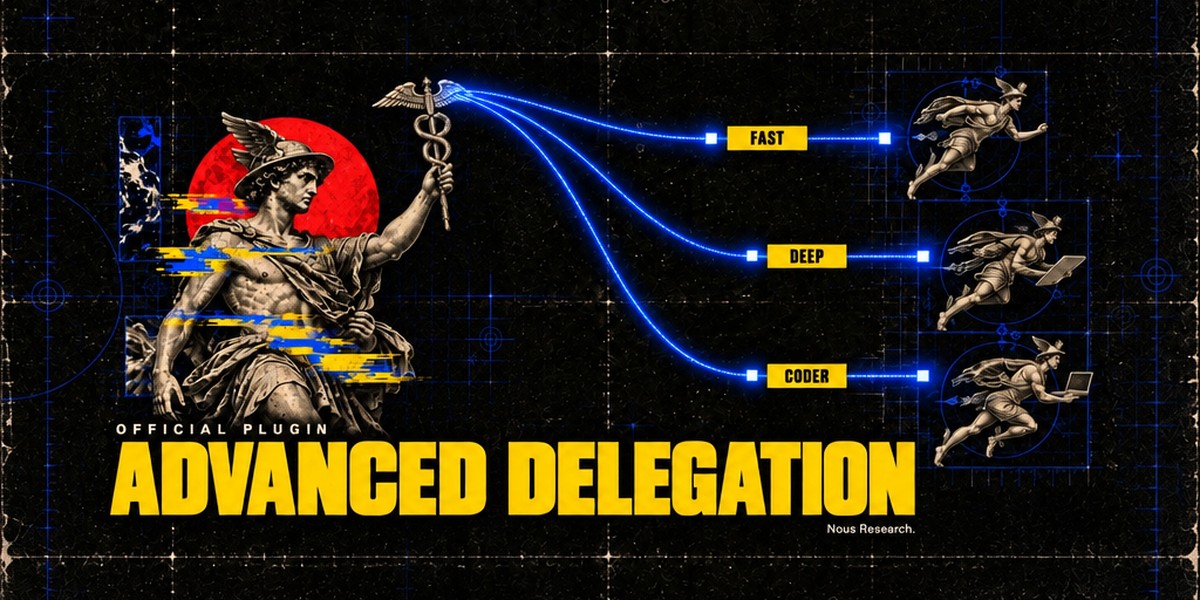
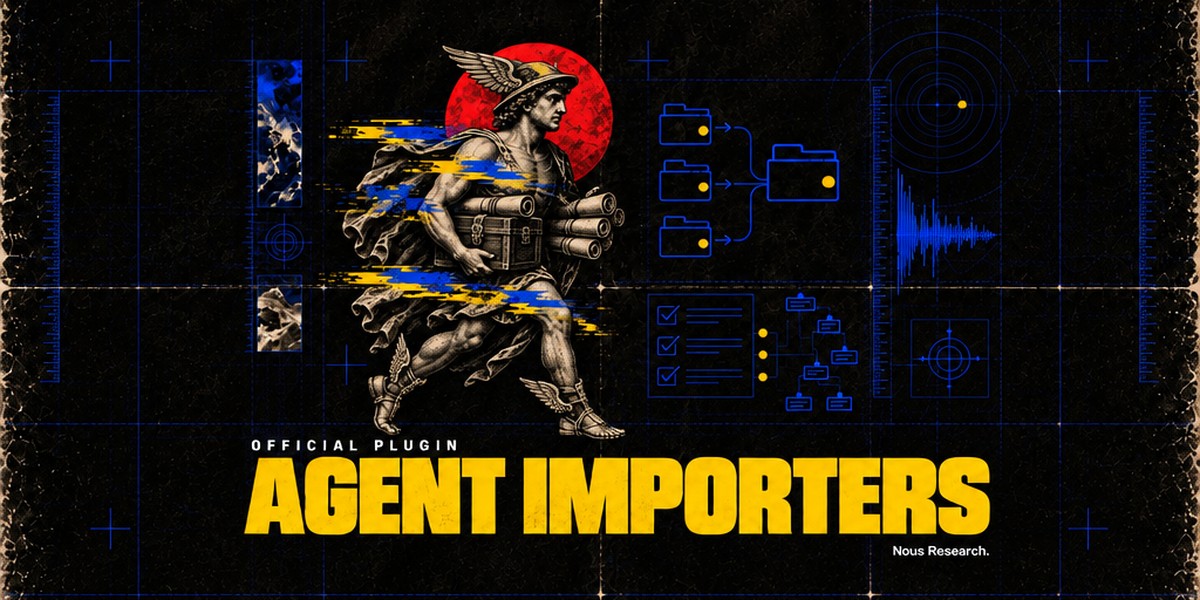
NousResearchaccent-pickerOKLCH accent colour picker for the Hermes Desktop status bar: drag it and the whole theme retints live, with palette commands to reset to the theme default or copy the current colour. A theme-authoring tool; the colour is scratch state and is never persisted. Desktop-only (desktop/plugin.js inside the plugin SDK surface); no agent tools, hooks, middleware or env vars.OfficialDesktop app592NousResearchadvanced-delegationTwo extra delegation modes for `delegate_task`, next to the built-in default. Model routes (`delegation.backend: model_map`): the agent picks a named model route per subagent from a list you define (e.g. fast, deep, local). Profile routes (`delegation.backend: profile_routes`): the agent runs a subagent as one of your Hermes profiles, with that profile's own model, credentials, skills and SOUL.md. Only route names and their one-line descriptions reach the model. Adds `hermes delegation config` (pick the mode and edit its routes; `--show` prints the setup) and the `/delegation` slash command (save a mode for the next session, or `--now` to apply it to the current chat). Needs Hermes 0.22.5 or newer, the first release with pluggable delegation providers; Hermes 0.22.0 to 0.22.4 refuses to install it, and on a core older than 0.22.0 it installs, logs one warning and does nothing. Disclosure — no Python dependencies and no network or model calls of its own; subagents run through core's `delegate_task` on the routes you configured. Writes only `delegation.backend` and `delegation.backends.*` (model_map / profile_routes) in the active profile's config.yaml, through core's config writer. A model route's optional `api_key` is stored in config.yaml in plain text (`provider:` keeps keys in .env / auth.json). Listing a profile under profile routes lets this profile's subagents use that profile's credentials, SOUL.md and terminal policy.Officialtools592NousResearchagent-importers`hermes import-agent`: import an OpenClaw (~/.openclaw, or legacy ~/.clawdbot / ~/.moltbot), Claude Code (~/.claude), Codex CLI (~/.codex), Cursor (~/.cursor), Grok Bot (a self-export the Bot writes from a prompt the importer prints) or OpenBot desktop (its openbot.db) setup into Hermes in one command; always previews first and asks before applying. Claude Code / Codex / Cursor: instructions, Cursor rules and memories become memory entries, Bash permission rules become command allow/deny lists, MCP servers land in config.yaml, skills are copied, and `--sync` re-imports sources that changed. OpenClaw (core's former `hermes claw migrate`; the plugin keeps that spelling, `hermes claw cleanup` and the openclaw-migration skill): persona, memories, skills, model and messaging settings, MCP servers and agent behaviour. Formerly built into Hermes core; `hermes setup` offers to install it when it finds one of these agents, and profiles with a registered sync source are migrated automatically. Disclosure — no Python dependencies, no network calls and no model calls. Claude Code / Codex / Cursor: reads those agents' local config trees (never their credential files; secret-looking MCP env vars and headers are stripped and listed) and writes only into the active profile (memories/MEMORY.md with a backup, config.yaml, skills/ and import-sync.json). OpenClaw: reads the OpenClaw dir (openclaw.json, its .env, workspace files such as SOUL.md / MEMORY.md / USER.md, skills); API keys and bot tokens come over only with --migrate-secrets (allowlisted names, shown in the preview). It writes into the active profile (config.yaml, .env, SOUL.md, memories/, skills/openclaw-imports/, a migration/openclaw/<time>/ report with item backups, and a backups/pre-migration-*.zip restore point), plus a workspace dir only when --workspace-target names one. It runs local pgrep / systemctl / tasklist checks to warn when OpenClaw or a Hermes gateway is still running, and `hermes claw cleanup` renames the OpenClaw dir to *.pre-migration after a confirmation. Grok Bot / OpenBot: instructions become SOUL.md, memories and user facts become memory entries, skills land in skills/<source>-imports/, scheduled routines become paused cron jobs (--activate-routines to start them) and event routines a notes file; credential-looking export keys refuse the file, and secret MCP env vars and headers are stripped and listed. OpenBot's database is opened read-only (or read from a scratch copy that is deleted after the read).Officialtools592NousResearchblenderOfficial Blender Lab MCP server over stdio, pinned to upstream v1.0.3, with a Blender workflow skill. Needs Git and uv; Blender 5.1+ is not needed at install. The skill opens Blender itself when a task needs it and, after you agree, installs Blender and Blender Lab's MCP add-on. First startup downloads Python dependencies; prepare the uv environment before connecting. Disclosure — tools execute arbitrary Python in Blender with your privileges; the skill starts Blender with online access for that session only (your saved preference is unchanged), and the add-on's local server on port 9876 has no password, so any program on this computer can use it while Blender is open; only after you agree does the skill download Blender from download.blender.org (about 400 MB, about 1.5 GB unpacked), check it against blender.org's sha256 list and install it in your own folder without administrator rights (Linux ~/.local/opt, macOS ~/Applications, Windows %LOCALAPPDATA%\Programs\Blender Foundation; never over an existing Blender), and download the v1.0.3 add-on, check its hash and install or enable it; first start downloads the pinned Blender Lab MCP server and its Python dependencies with uv. Server discovery does not prove scene readiness.Officialtools592