 Adolanium
Kemet
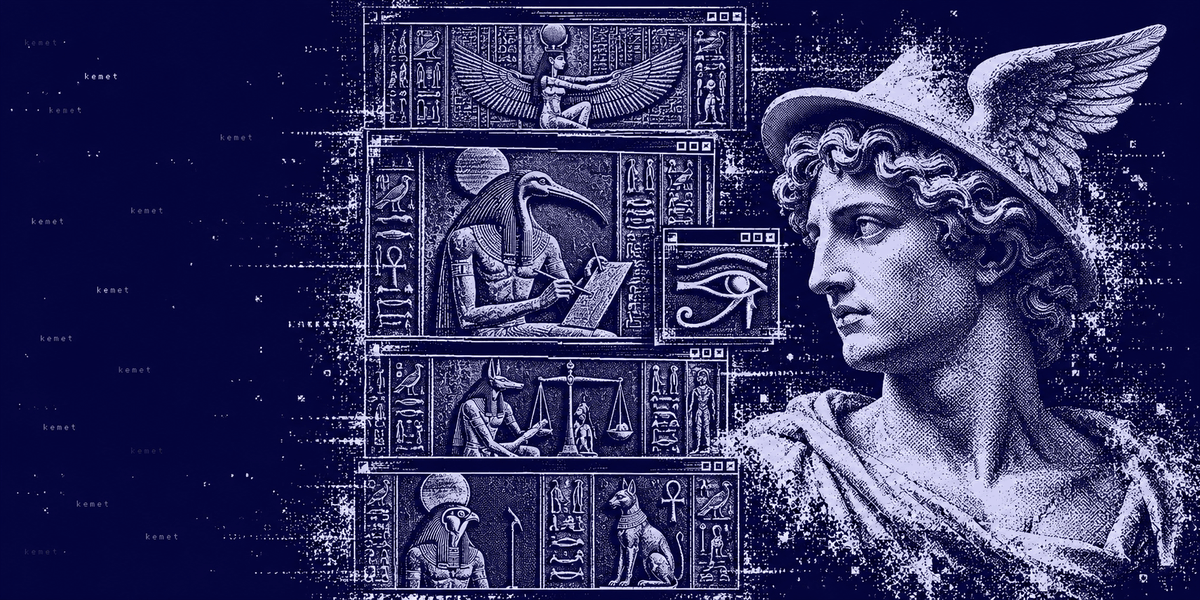
Twelve Egyptian gods for your Hermes desktop.
Twelve themes for Hermes Desktop, carved in painted relief and gold leaf. Each god brings their own pigments,
their own lettering, and a temple wall that frames the HERMES AGENT name in a cartouche.
It starts with Thoth, the ibis-headed scribe the Greeks called Hermes.
FOR HERMES DESKTOP · COMMUNITY THEMES · VERSION 0.2.2
See all twelve live · Try it in a minute · Meet the twelve · Switch any time
Try it in a minute
You need Hermes Desktop 0.22.2 or later. You don't need a terminal.
1. Install. In Hermes Desktop, open Capabilities → Plugins and click Install from Git. Paste this address, click Review repository, then install:
https://github.com/Adolanium/hermes-kemet
hermes plugins install Adolanium/hermes-kemet
If it asks whether to enable the plugin, either answer works. That switch is for the agent side, and Kemet has nothing there.
2. Turn it on. Kemet now appears in Capabilities → Plugins. Flip its Desktop switch on. Desktop plugins installed from a package start turned off, and this is the step people miss.
3. Pick a god. Type this in the message box and press Enter:
/skin thoth
The whole app changes on the spot, with no restart. Try /skin anubis next, or plain /skin to step through every theme you have.
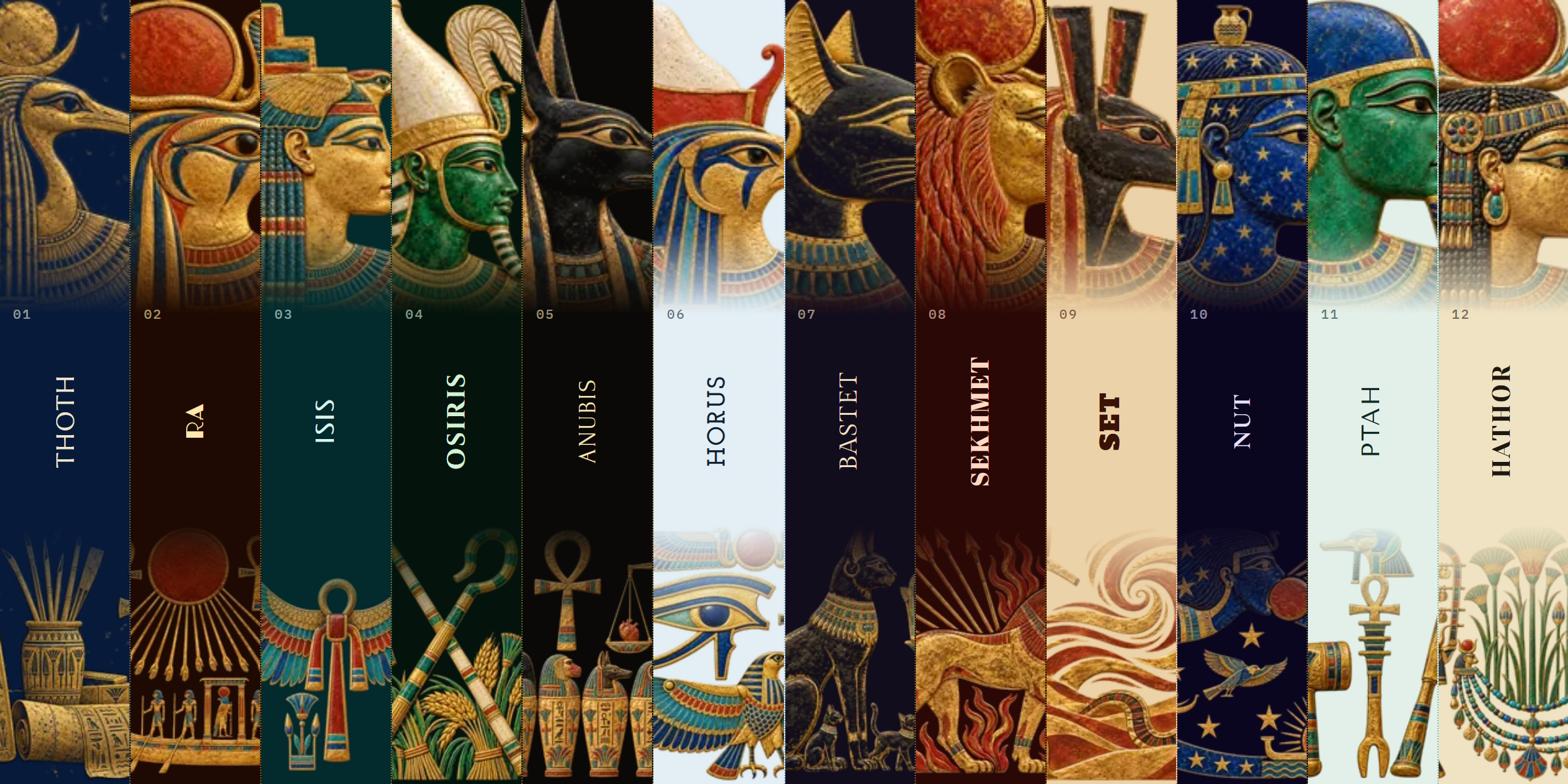
Meet the twelve
Click a card to see the full window.
|  |
 |
|:---:|:---:|
|  |
 |
|  |
 |
|  |
 |
|  |
 |
|  |
 |
Switch any time
Every Kemet theme is a normal Hermes theme, so all the usual ways to switch work:
| Where | What to do |
| --- | --- |
| Message box | /skin <name>, for example /skin isis. /skin list shows every theme; /skin alone moves to the next one. |
| Command palette | Press Ctrl K (⌘ K on macOS), choose Change theme, and pick one. |
| Settings | Settings → Appearance → Theme. |
The names are thoth, ra, isis, osiris, anubis, horus, bastet, sekhmet, set, nut, ptah and hathor. To go back to the stock look, type /skin nous.
Hermes remembers your choice for each profile, so a work profile can keep Thoth while a personal one keeps Bastet.
In the terminal too
The twelve gods also come as skins for hermes in the terminal, both the classic interface and hermes --tui. Each skin draws the god's bust from the Desktop sidebar as pixel art beside the start panel, letters HERMES AGENT in the god's colours, and repaints the prompt, status bar and menus in the god's palette.
Terminal skins are files, not part of the plugin switch, so copy them once after installing, and again after a plugin update:
mkdir -p ~/.hermes/skins
cp ~/.hermes/plugins/hermes-kemet/cli/skins/*.yaml ~/.hermes/skins/
hermes skin use kemet-thoth
On Windows, Hermes keeps its home in %LOCALAPPDATA%\hermes instead of ~/.hermes, so in PowerShell:
New-Item -ItemType Directory -Force "$env:LOCALAPPDATA\hermes\skins" | Out-Null
Copy-Item "$env:LOCALAPPDATA\hermes\plugins\hermes-kemet\cli\skins\*.yaml" "$env:LOCALAPPDATA\hermes\skins\"
hermes skin use kemet-thoth
Each skin is the god's name with kemet- in front, so a skin never shadows the plugin theme of the same name and Desktop keeps the themes with their art. Inside a session, /skin kemet-anubis switches too: the prompt, status bar and menus change right away, and the art shows on the next start (hermes --tui redraws it at once). Each profile keeps its own skins, so for a profile copy them into ~/.hermes/profiles/<name>/skins/ (on Windows, %LOCALAPPDATA%\hermes\profiles\<name>\skins\) as well. hermes skin use default goes back to the stock look.
- Each skin also carries
banner_art, the whole bust image 80 columns wide (30 to 40 rows) dithered in three tones of the Desktop inks, like the Desktop art. The TUI paints one colour per line, so Hermes usesbanner_hero, the 60-column one-colour version, whereverbanner_artis not supported or does not fit. - While you browse skins with
/skinand the arrow keys, the classic interface previews each one live: its colours, and a small version of its bust above the menu (banner_thumb, shown only by a Hermes that supports it, likebanner_art). Enter keeps it. - The art is tuned for dark terminals; on a light terminal the palette switches to its light variant, but the bust stays light.
- The bust is 60 columns wide and sits in the panel's left column. In the TUI that column takes up to 40% of the width, so the bust stays whole from about 160 columns; narrower, its right side is cut.
- Hermes shares the active skin between surfaces, so switching skin in the terminal also switches Desktop. With the plugin on, Desktop follows to the god's full theme, art included:
kemet-anubisin the terminal gives Anubis in Desktop. Desktop also lists the terminal skins as themes; picking one there does the same.
The skins are generated from the same art as the Desktop themes: python3 cli/build_skins.py (needs Pillow) rewrites cli/skins/.
Small decisions, already made
- One install, twelve themes. All twelve ship in a single plugin. There's nothing to choose at install time and nothing extra to download later.
- Painted, not printed. The art is full-colour relief with gold leaf, and every god wears the pigments that belong to them: lapis for Thoth, malachite for Osiris, red ochre for Sekhmet, stars for Nut.
- A frame of its own. The HERMES AGENT wordmark sits in a cartouche, tabs become small cartouches when active, and the dividers are the double register lines of a temple wall.
- Your light or dark setting can't break the art. Each theme keeps its own palette in both modes. Four are light (Horus, Set, Ptah and Hathor); the other eight are dark.
- Nothing leaves your machine. The art and the fonts are packed into
plugin.js, so themes switch instantly and work fully offline. - The chat stays readable. The art lives in the sidebar and the empty new-session screen. Once a conversation starts, it's text on a calm ground.
Update or remove
hermes plugins update hermes-kemet
hermes plugins remove hermes-kemet
Or use Capabilities → Plugins: switch Kemet off to hide the themes, or remove it from there. If a Kemet theme was active, Hermes goes back to its default theme.
What it touches
- Theme registration through the Desktop plugin SDK, the same way any theme plugin adds itself to the picker.
- Style rules that apply only while a Kemet theme is active, and disappear when you switch away.
- Fonts, bundled inside the plugin under the SIL Open Font License: IBM Plex Sans and IBM Plex Mono for the interface, and one wordmark face per god: Marcellus (Thoth), Limelight (Ra), Federo (Isis), Cinzel (Osiris), Forum (Anubis), Josefin Slab (Horus), Gilda Display (Bastet), Abril Fatface (Sekhmet), Alfa Slab One (Set), Cormorant SC (Nut), Tenor Sans (Ptah), Yeseva One (Hathor).
It makes no network requests, adds no agent tools, hooks, background processes or settings, and reads none of your data.
The cartouche, register lines and placement of the art style Hermes Desktop's own markup, because the plugin SDK has no slots for decoration yet. If a Desktop update renames that markup, those touches fall back to the plain palette. Nothing else breaks.
Compatibility
| Hermes Desktop | Platform | Status |
| --- | --- | --- |
| 0.22.2 | Windows 11 | Tested |
| 0.22.2 | macOS, Linux | Expected to work; not yet tested |
More gods
Kemet is one of three packs. They install side by side, and none of their theme names overlap, so every god shows up in the same picker.
- Pantheon: 18 Greek gods in dithered marble, all twelve Olympians and more. See them live.
- Asgard: 12 Norse gods carved in runestone and wood. See them live.
License
MIT. The bundled fonts are under the SIL Open Font License; see LICENSES.
Community project
Kemet is an independent community theme pack. It is not affiliated with, endorsed by, sponsored by, or officially associated with Nous Research or the Hermes Agent project. Hermes, Hermes Agent, and Nous Research are names and marks belonging to their respective owners.
README from the reviewed commit a54491c; it updates when the author re-pins.