AI Subscriptions
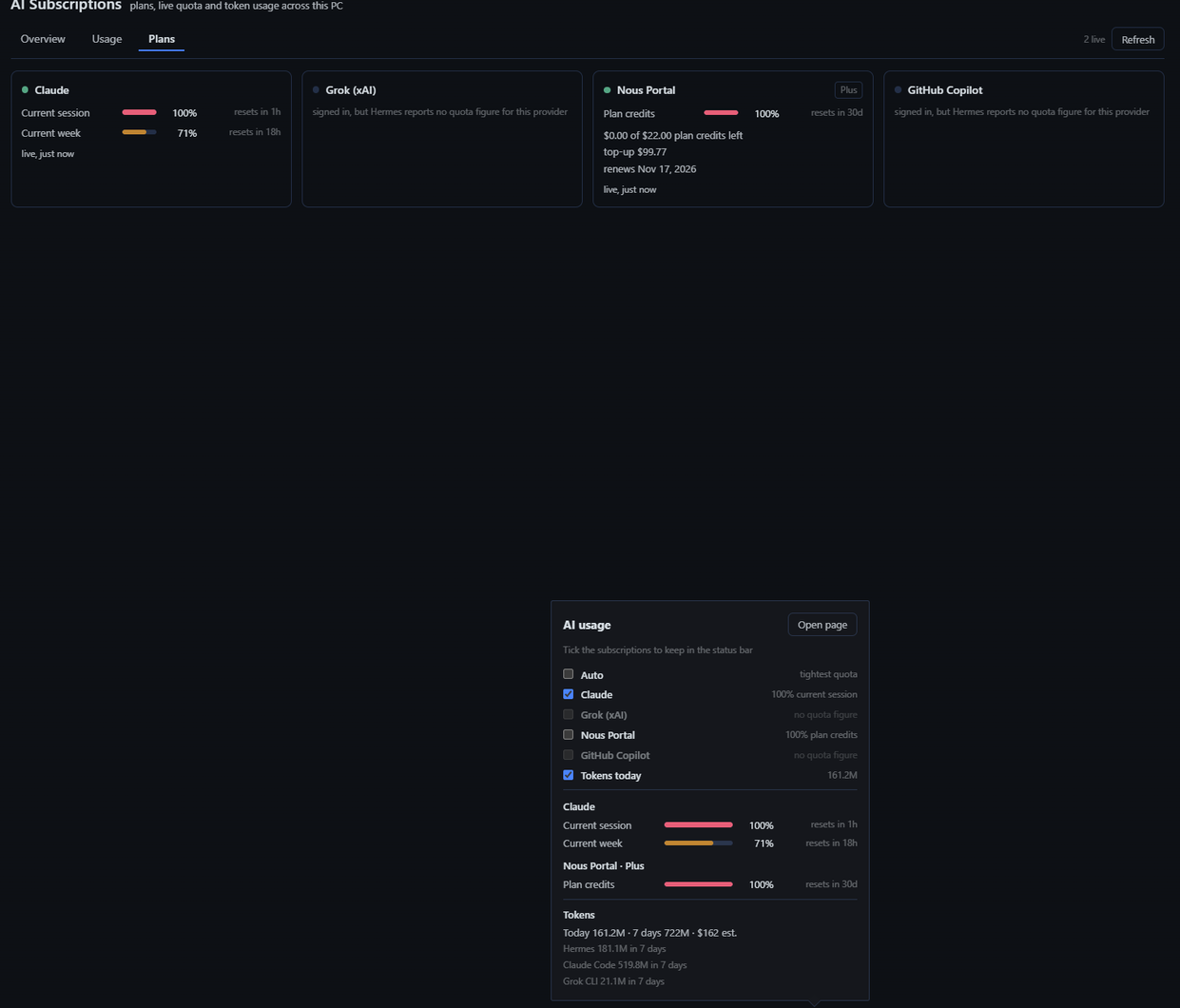
A Hermes Desktop page, a status-bar chip and a popover that show your AI subscriptions and how much of them you have used.
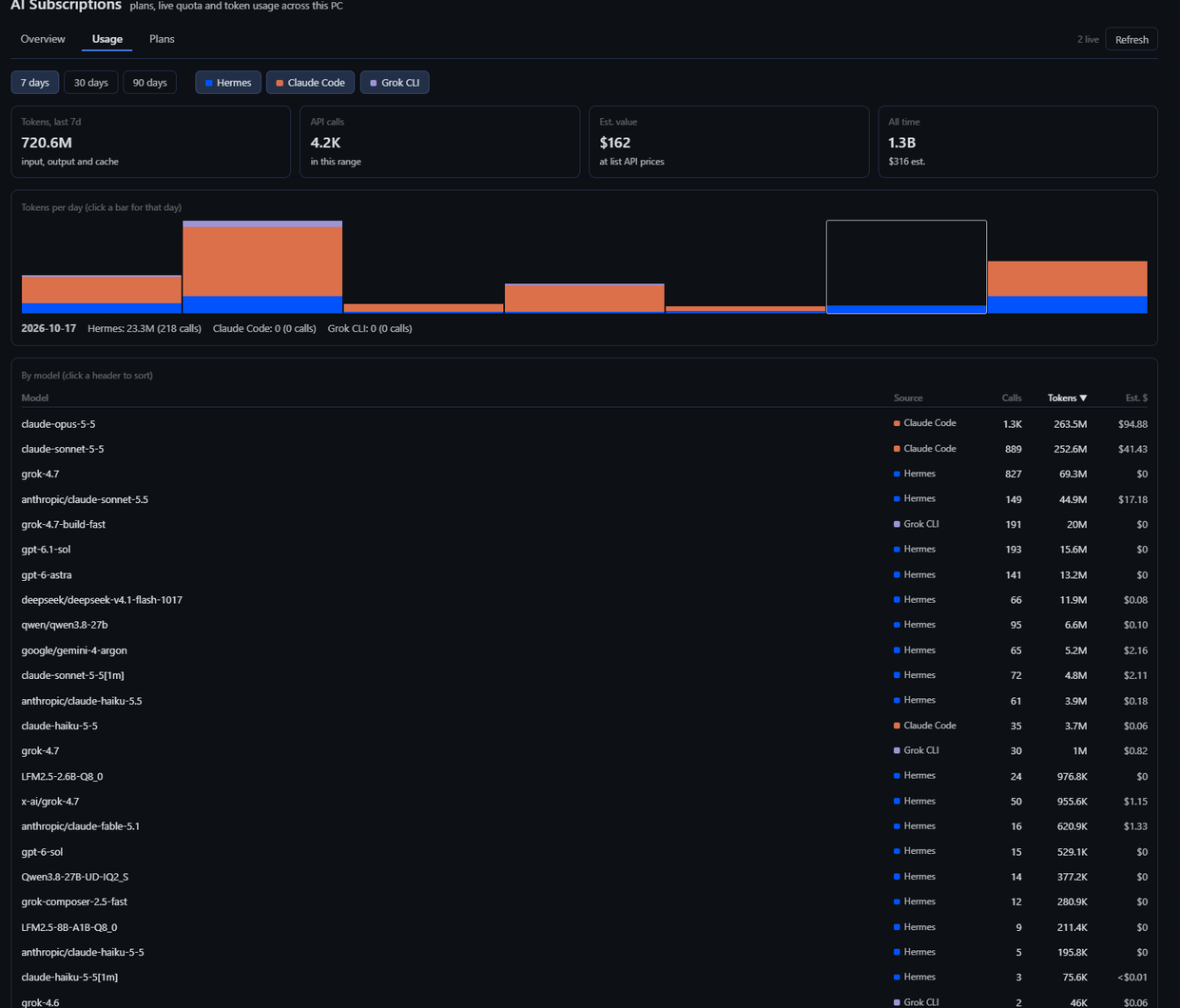
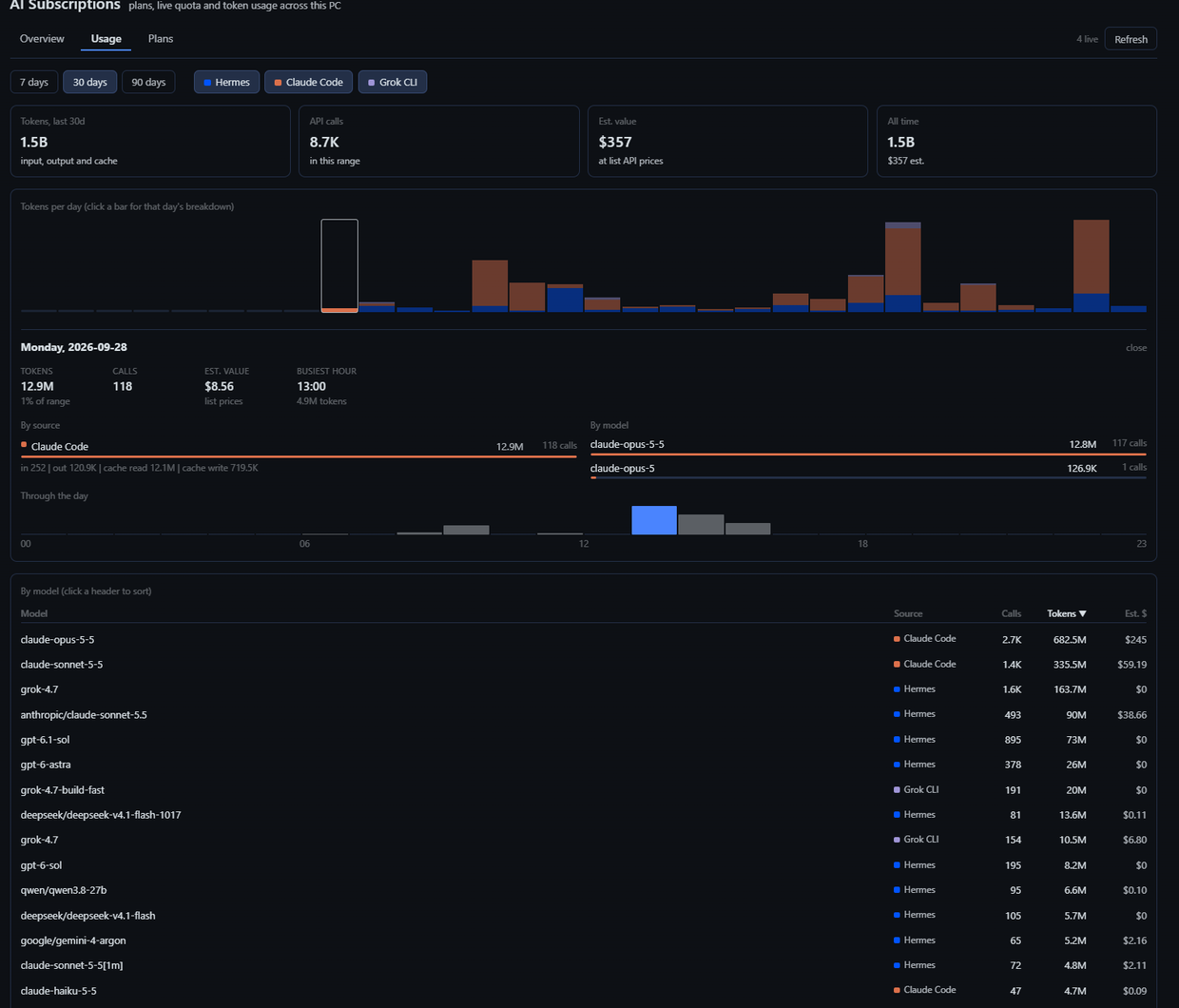
- Overview, Usage and Plans tabs. Pick 7, 30 or 90 days, toggle sources, sort the model table.
- Speed as measured tokens per second, per model, per day and overall, from the tools that record timing (Grok CLI per call, Claude Code per turn summary). Hermes keeps no per-call timing, so its models show a dash.
- Click any day in the bar chart for that day's breakdown: tokens, calls and estimated cost, a per-source split with the input/output/cache mix, the models that ran, and an hour-by-hour strip with the busiest hour.
- Status-bar chip. Shows your tightest quota by default. Tick the subscriptions you want to keep there, and optionally today's token count. Your choice is saved.
- Quota for every signed-in provider that reports it, taken from Hermes itself (
model.optionsandusage.bars). The page polls Hermes' cached windows; Hermes refreshes that cache in its own background threads, and only the Refresh button asks for an explicit refresh. Nothing here reads a credential. - Token usage across this PC: Hermes, Claude Code and the Grok CLI, with an estimated dollar value from Hermes's own price list. Estimates are list prices, not what you were billed.
What it reads
Read-only, local, no network calls of its own:
| Path | Why |
|---|---|
<HERMES_HOME>/state.db |
Hermes session token counts |
<HERMES_HOME>/models_dev_cache.json |
list prices for the dollar estimate |
~/.claude/projects/**/*.jsonl |
per-message token counts Claude Code already logs |
~/.grok/logs/unified.jsonl, ~/.grok/sessions/*/*/summary.json |
token counts the Grok CLI already logs |
It writes nothing outside the plugin's own browser storage (tab, range, status-bar choice).
What it does not do
No credential, .env or auth.json reads. No provider API calls from the plugin. No self-update. Gemini and Antigravity keep no token counts on disk, so they are not included.
Full edition
A fuller version with live Claude, Grok, Nous and Copilot polling lives in the repository root. It reads local logins and so is not part of the catalog.