 jacobhausler
Hermes Workflows

Agent-owned workflow graphs for Hermes Agent.
Your agent authors a JSON graph of agent nodes, fan-outs and gates; a background
runner executes it outside the caller process tree and hands results back through
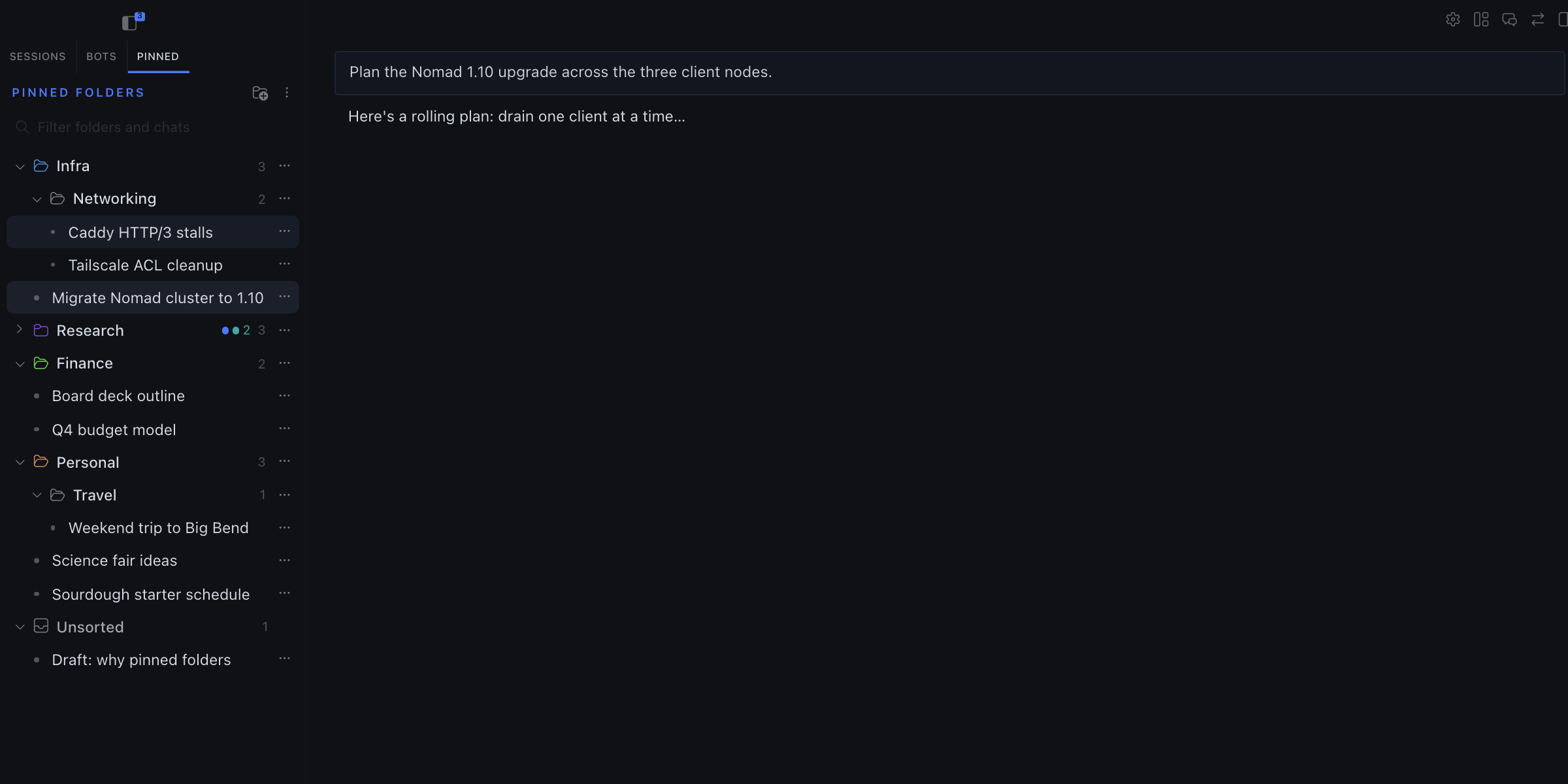
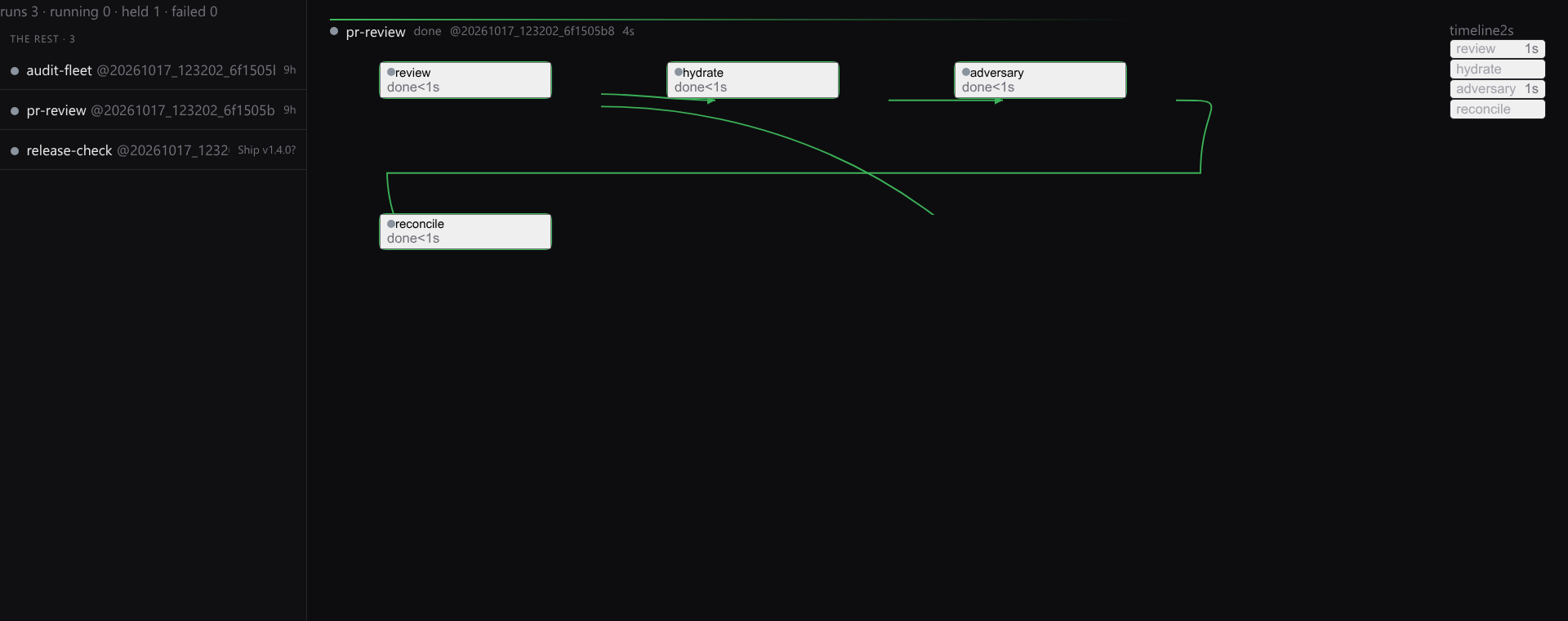
the same workflow tool it launched from. Hermes Desktop draws the live DAG.
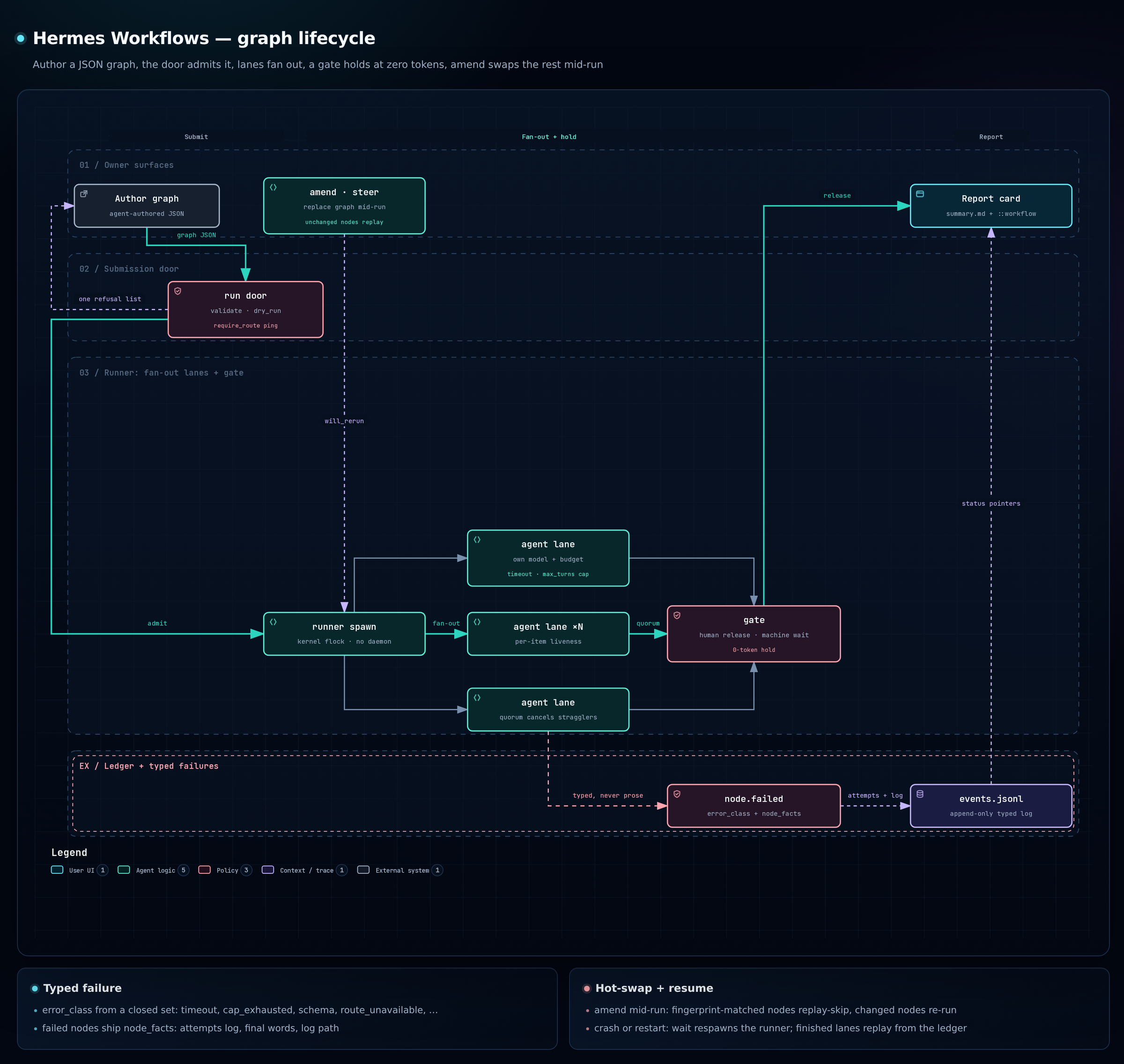
Four production diagrams, glossed two lines each:
docs/showcase.md.
Why this exists
A single agent turn is one long, fragile thread of work: one context, one
timeout, no resumable checkpoints. A graph splits the job into nodes with
explicit dependencies — parallel recon lanes, a synthesis join, an adversarial
review gate — each node a separate child session with its own model, budget, and
typed failure. When something dies or you change your mind mid-flight, only the
affected nodes re-run: completed work is replayed from its stored fingerprint,
not re-paid.
What you get
| Capability | In one line |
|---|---|
| Graph runs | Agent nodes with goal, after edges, per-node model/provider/reasoning, and max_turns/timeout/run_budget caps; optional concurrency/item_concurrency — per graph or as launch-time run args, clamped to owner caps |
| Fan-out | One node → N live children from fanout.items or items_from:"<node>.items"; per-item liveness; quorum cancels stragglers once N commit (they are cancelled, never a failure) |
| Human + machine gates | A gate holds on a question until release; gate.wait holds on a timer or an argv probe at zero token cost; when predicates branch on upstream output; on_skip:"prune" retires the losing arm; an optional default-off admission gate answers human releases at zero turns (docs/admission-gates.md) |
| Fingerprint resume | Crash, restart, or amend the graph mid-flight — nodes whose effective fingerprint still matches replay-skip; only what actually changed re-runs. run/amend accept dry_run:true for a no-write preview |
| Cooperative steer | steer queues text for a running node; the child pulls it at its next natural seam via the tool's inbox action — prompts are never rewritten mid-flight |
| Profile delegation | A node can run as another local Hermes profile (its instructions, memory, tools) behind a per-profile consent file — multi-personality graphs on one machine, no isolation claimed |
| Typed failures | Every node.failed carries error_class + attempts from a closed set (timeout, cap_exhausted, provider_400, schema, precondition, cancelled, fatal_quota, route_unavailable, …) — you never infer a cause from prose; failed nodes ship node_facts (class, attempts log, final words, log path) |
| Route integrity | A node that pins a model is fail-closed (require_route, on by default): a proven-dead pin refuses to launch rather than silently bill another model; with an owner-configured confidence_substrate ladder (#116) the substitution is engine-stamped and disclosed in the node's result contract — never silent |
| Process-tree honesty | An exit-0 child is believed only when its whole process tree is dead; a backgrounded worker is typed, never mistaken for done, and a fenced answer over a live tree commits partial with proof |
| Compact status | Mid-run status/wait return output pointers and per-node metrics (missing evidence reads unknown, never a false zero); detail:"full" opts into everything |
| Wedged-lock recovery | The runner is admitted by a kernel flock on runner.lock held for the process's whole life — a dead holder's lock is released by the kernel itself, the next spawn contends cleanly, and there is no stale lock to clear by hand |
| Desktop DAG view | Live graph, fan-out stacks, timeline, and a ::workflow{id="…"} inline card in any reply; RUNNING / THE REST agent-first panes (every row carries its originating agent), and a session strip under the composer showing this chat's runs (core ≥ v2026.7.30; older shells get the fallback slot) |
| Library | save a proven graph (description + tags — flat or facet:value, e.g. use_case:code-review), library lists it richly and filters by tags (with a tag_vocab echo so agents reuse the live taxonomy), run from:"<name>" replays it; optional study-only submit takes a why_not_library receipt and is quarantined for study, never auto-saved; inbox kind:"submissions" lists these submissions. Ordinary one-off run executes without lookup or curation |
| Composite graphs | A graph-level include expands shelved library graphs into a run at launch — namespace-isolated ids, cycle/depth/size guards, model policy unions in and never relaxes |
| Authoring skill | Bundled workflow skill: grammar, operations, and measured per-shape budget presets (recon/build/review/publish) |
Offline checkout drift probe
python3 scripts/drift_check.py --repo <checkout> (default: this checkout).
On demand only — no fetch, daemon, or cron. Final stdout line:
installed_version, upstream_latest (nearest local release tag by
git describe --tags, not the remote's newest), local_only_commits,
trailers_missing, verdict. Exit 0 = clean; exit 1 = drift
(version_mismatch, trailers_missing, then local_only, in that precedence —
commits after the tag need (est-…) or #NN references in their messages);
exit 2 = error (absent installed-version changelog heading, missing tag,
unreadable git state). Reads only plugin.yaml, CHANGELOG.md, and git
describe/rev-list/log.
The workflow tool
One tool, action-routed — the complete surface, with the flags that matter:
| Action | What it does |
|---|---|
| run | Launch a graph from graph (inline), graph_path (≤1 MiB local file), or from (library name). Optional name, run_context (seed string, or a binding map replacing {run.KEY} refs — malformed input is refused before anything is written; values land in prompts, so no secrets), team, lane_key (dedupe: a second run on an unfinished incumbent returns it instead of spawning), dry_run:true (full validation, zero writes). |
| status | Read-only read model: per-node state, metrics, held gate, node_facts on failures, derived next steps — never spawns a runner. lane_key reads the incumbent instead; a lane entry whose claimed run dir no longer exists on disk reports state: "orphaned" (a claimed-then-lost run, not a forever-pending ghost). |
| wait | The resume-and-watch verb: the only read action that respawns an idle runner; blocks to the next boundary (default 600 s, ceiling 1800 s), self-yielding before the host's tool deadline with a "call wait again" note. |
| release | Answer a held human gate (gate_id, answer); respawns the runner when idle. A human release pre-empts a machine wait park. |
| release_lock | Operator escape hatch for a wedged runner.lock: renames the stranded inode aside under the admission heal-barrier and hands the lane a fresh lock path. REFUSES unless zero live holders are proven (kernel ledger + dead lease) — never heals on EACCES or a live holder. |
| steer | Queue steering text for a running node (refused on gates and terminal nodes; delivery is cooperative via the child's inbox pull — never a mid-prompt injection). cmd:"kill" (with node) is the lane-kill form, identical to kill; it never queues text. |
| inbox | Child-side pull of steering lines baked for this spawn — exactly-once per spawn. Parent-side kind:"submissions" lists submit items newest-first. |
| amend | Replace the graph mid-run with the whole new graph (dry_run:true previews will_rerun without writing). Fingerprint-valid unchanged nodes replay-skip. A patch edits a few node fields without resubmitting the whole graph. |
| diff | Confirm an amend before applying it: the amend door with dry_run FORCED — accepts patch or a full graph and returns the preview plus a unified graph_diff; touches nothing. |
| stop | Request a stop at the next boundary; in-flight children are killed; stop ≠ failure — cancelled work re-drives on resume, and a lane_key is freed for the next dispatch. |
| kill | Node-targeted lane kill (run_id + node): SIGKILLs that node's in-flight children and finishes the node failed with error_class=killed. Siblings and the run keep going (no stop.request). The kill marker stays for the run — a killed lane stays killed. |
| list | All runs (capped page + full-census counts, per-run provenance rollup when present). |
| save | Shelve a graph in the library under a name (overwrite = current best): description, tags (1–10, flat or facet:value; reuse library's tag_vocab verbatim), optional source attribution writes provenance (owner, digest, timestamp) — attribution, never access control. |
| submit | Quarantine a hand-rolled graph the library didn't cover for human-gated study — requires a why_not_library receipt (≥80 chars); never joins the library. |
| library | List shelved graphs richly (nodes, gates, fan-outs, description, tags, provenance), filterable by ALL-match tags; an empty filtered result says which tag starved. name:"<name>" returns required inputs and an instantiate command. |
| validate | Dry-run the door's validation pipeline (defaults fill, defect collection, model/route policy) with no ping and no writes — {ok, errors:[{node,field,msg}], resolved_routes}. |
| doctor_version | Read-only version truth for THIS install: {live_version, newest_packaged, source_commit, drift} — plugin.yaml vs the install.json provenance pack.py stamps at build time; one read, no network. |
Plus a /wf slash command: bare /wf lists the library; /wf <name> [note]
returns the atomic run instruction for that graph, carrying the note as its
run_context seed (the launch itself is the agent's run call — the command
never spawns). /wf show <name> (or
workflow {"action":"library","name":"<name>"}) returns required inputs and
an instantiate command; /wf gates boards held gates (needs the
admission_gates setting; see docs/admission-gates.md);
/wf orphans lists
orphan-held runs across the fleet. Library-sourced launches require nonempty string bindings
for every {run.KEY} on the shared text surface, including echo output, gate
options and machine argv; surviving refs refuse before any write. Inline graphs
retain their existing behavior, including refusing unbound machine argv.
A shelf row can declare its launch contract. The typed top-level params block
(pin/tune kinds) plus the where/by door-time seams bind presence and
patched goals at launch — every violation lands in ONE refusal, and the run
records the reproducibility triple (meta.binding). The lighter
save params:{KEY:{desc,default}} envelope stores display hints only: /wf show
renders them, required keys always derive from graph refs, and defaults are
suggestions — never automatic bindings. See
references/grammar.md.
Graph grammar in 30 seconds
Four node types — agent, gate, echo, join — and a closed key set per type
(anything outside it is refused at submit with a per-defect error list, never
silently ignored). The smallest useful graph:
{ "name": "check",
  "nodes": [{ "id": "inspect", "type": "agent",
              "goal": "Inspect the target. Return one fenced JSON object." }] }
workflow { "action": "run",  "graph": <the object above> }   → run_id
workflow { "action": "wait", "run_id": "<run_id>" }          → repeat until terminal
Fan-out with quorum, gates with when/on_skip/wait, requires output
preconditions, after_partial harvest release, inputs selection from upstream
output, per-domain (string/boolean/integer) enums, answer-schema bounds
minItems/maxItems (on type:"array")
and minLength (on type:"string", counted on stripped chars — a whitespace-only
string is too short), graph-level defaults (precedence: explicit node
key > shape preset > defaults) and model_policy — the authoritative
vocabulary is references/grammar.md; the bundled
authoring skill keeps a compressed working copy in SKILL.md.
Runnable templates in examples/, grouped by role —
basics/ (one idea each), build/ (fan-out and ledgers), review/
(independent judgment), release/ (issue→PR, release lifecycle, gates and
watchers), ops/ (incidents). examples/README.md is the
map: one line per template, what it teaches, and which arm its receipts proved.
Every example ships with its rendered diagram under
examples/diagrams/.
What a run leaves behind
Each run is a directory (~/.hermes/workflows/<run-id>/ by default): the
committed graph.json, an append-only events.jsonl typed event log, per-node
results under nodes/, prompts and logs under logs/, gate answers under
gates/, and a summary.md. Resume, amend, and the desktop all read the same
shared state. There is no hidden control plane and no daemon: exactly one runner
process per run, admitted by a kernel lock, spawned outside the caller's process
tree. Run states (running, held, interrupted, done, failed,
stopped), owner wake semantics, silent-runner reaping, and recovery
procedures:
references/operations.md.
Install
hermes plugins install hermes-workflows      # from the catalog (pinned SHA)
hermes plugins install <git-url>@v1.4.3      # fallback until the catalog entry merges (see INSTALL.md for the zip)
hermes plugins enable hermes-workflows
Restart the backend (hermes serve) so the tool and dashboard routes mount.
Before disabling or removing the plugin, stop live runs: use workflow {"action":"list"}
to find their run IDs, then workflow {"action":"stop","run_id":"<id>"} for each.
Detached runners can outlive a session, gateway restart, or plugin disable until a
boundary; disabling alone does not stop them. Desktop gate answers use the SDK to
send a visible resume turn to the run owner's chat; older Desktop builds insert
text for you to send, or ask you to type workflow wait in that owner chat.
If Hermes Desktop runs on a different machine than the backend, copy
desktop/plugin.js to that machine's ~/.hermes/desktop-plugins/hermes-workflows/plugin.js
— the app hot-loads it. Manual/zip install and removal: INSTALL.md.
Two builds, one codebase
The plugin needs no patched Hermes. Every child spawn rides the stock quiet
one-shot CLI contract, and every install runs the same code. Exactly one field
differs, and it is optional:
| | stock Hermes (catalog install) | with the optional core patch |
|---|---|---|
| graphs, fan-out, gates, steer, resume, desktop view, cards | ✓ | ✓ |
| a child that dies on its max_turns cap | error_class: unknown + preserved partial/log | typed error_class: cap_exhausted + reason |
| how | nothing to do | one sha-stamped patch — docs/patched-core.md |
The tier is self-reported: after a failed child, status shows
turn_report: typed or untyped, so you always know which build you're on.
When upstream PR #121041
lands, the branch collapses and that doc deletes itself.
Requirements
- Hermes Agent ≥ v2026.9.21 (package version 0.21.4) — measured stock
-Q
CLI and quiet turn-report contract; see docs/catalog/pr-body.md.
Older 0.21.3 deployments are below this declared floor and will skip plugin admission. - Python 3 (stdlib only — the plugin imports nothing outside Hermes)
- Node for the desktop half's tests only; the app loads
plugin.jsuncompiled
Starter set: run something today (general/)
You don't have to author a graph first. Six scrubbed, estate-neutral starter
graphs ship with the plugin under library/general/, so a fresh install can
run a real DAG out of the box:
{ "action": "run", "from": "general/report-and-verify" }
| Address | Reach for it when |
|---|---|
| general/pr-review-light | an open PR needs an advisory second read before a human looks |
| general/issue-triage | a queue needs a standing rule applied unattended (the {run.KEY} seed-contract exemplar) |
| general/test-first-feature-slice | one behavior is worth a red-green-proof slice |
| general/fan-out-audit-census | a tree needs a per-file audit with an honest tally (the 8 KB per-parent input cap, taught by example) |
| general/report-and-verify | a producer will drop a report later and you want zero tokens while waiting (machine wait gate exemplar) |
| general/queue-executor | a tracker/file queue has open items to execute in parallel with receipts, not vibes (resume-from-disk + re-run verify exemplar) |
Resolution order for from: general/<name>: your runs-root library first
(<runs_root>/library/general/<name>.json), legacy launch root second, the
packaged set last. Every graph routes agents through model tiers
(worker/manager) — none names a vendor model — and each declares its seed
params in meta.params.
Customize: copy a packaged JSON to your own shelf (or tune it and
save name=general/<name>); your copy shadows the packaged one at the same
address, and the door never writes the packaged files.
Share back: tuned graphs are welcome upstream — see the submit flow in
issue #50 ("share your tuned graph back"): fork, drop the envelope under
library/general/, run the scrub gate, open a PR. Per-graph author notes
live in library/general/README.md.
For agents and contributors
AGENTS.md is the front door: repo map, operate/contribute
procedures, and the rules that keep the tree publishable. Changes are gated by
the serial suite (python3 scripts/suite.py . ci-out) and
hermes plugins validate . — both run in CI.
graphify (a separate tool) can query the code graph locally; it is never
required and never gates.
License
MIT — see LICENSE.
README from the reviewed commit 464b4aa; it updates when the author re-pins.