GitHub profile
Plugins by olric3015
18 plugins by olric3015 in the catalog, most-starred first.
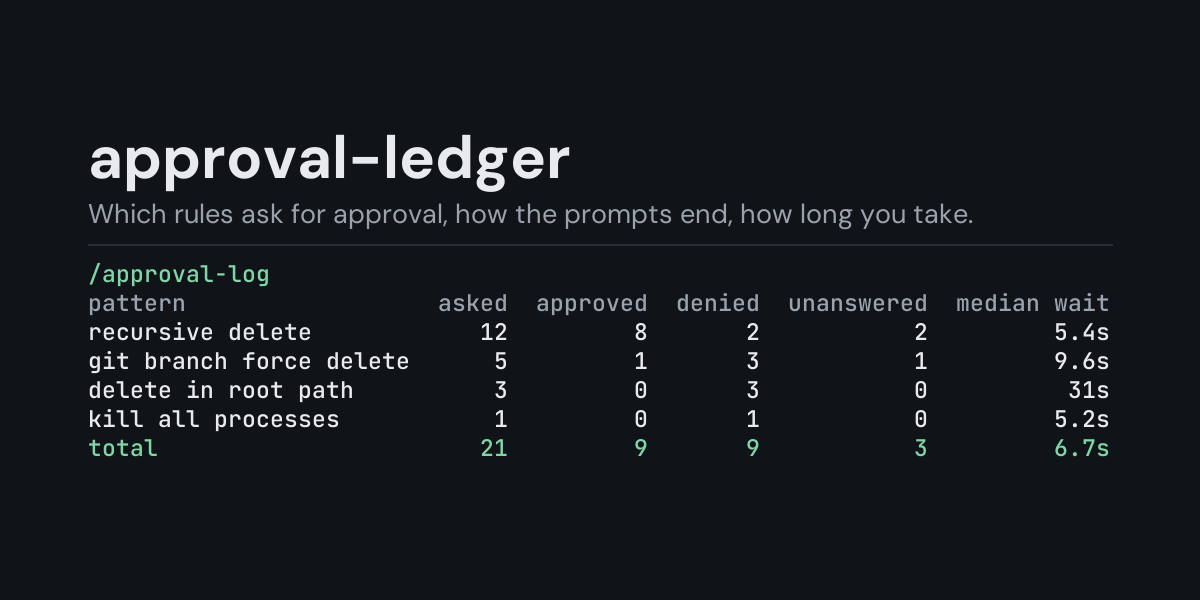
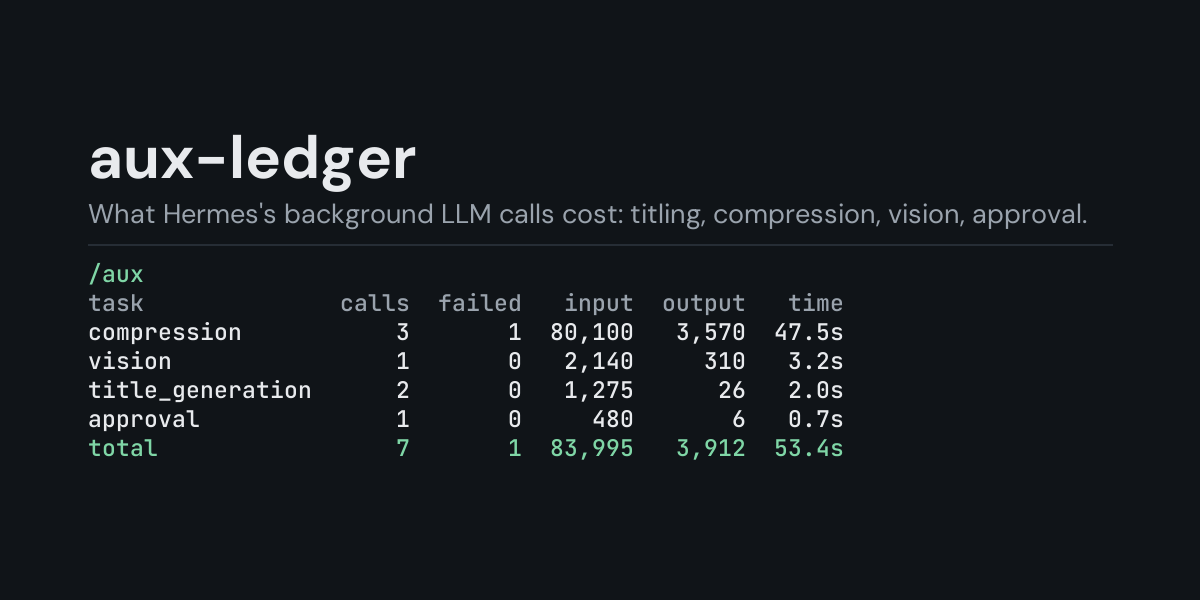
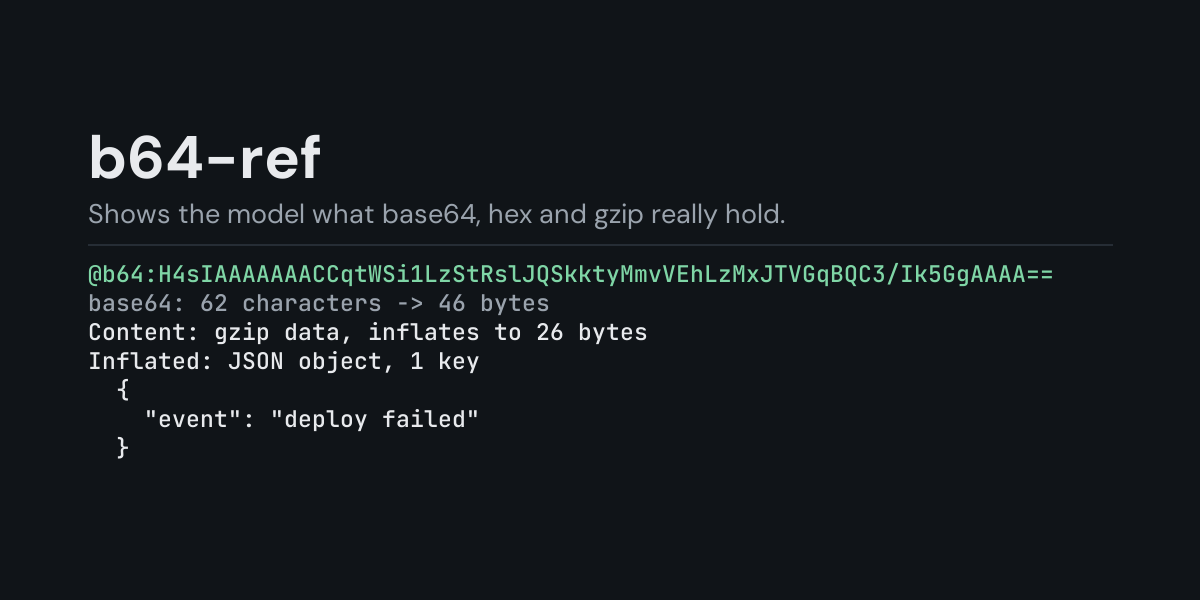
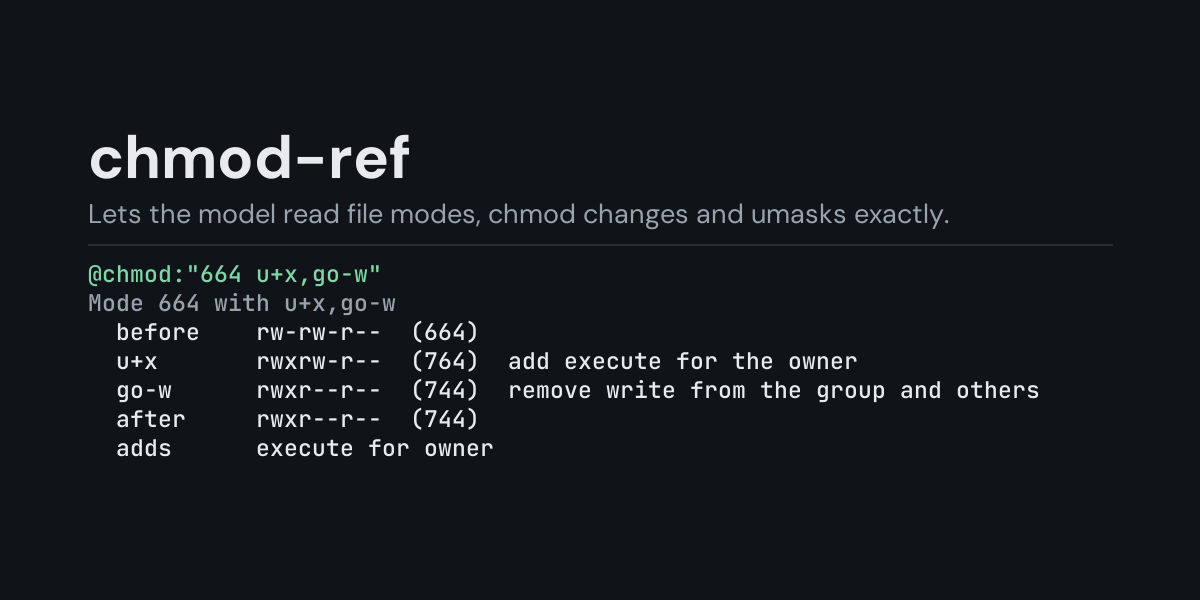
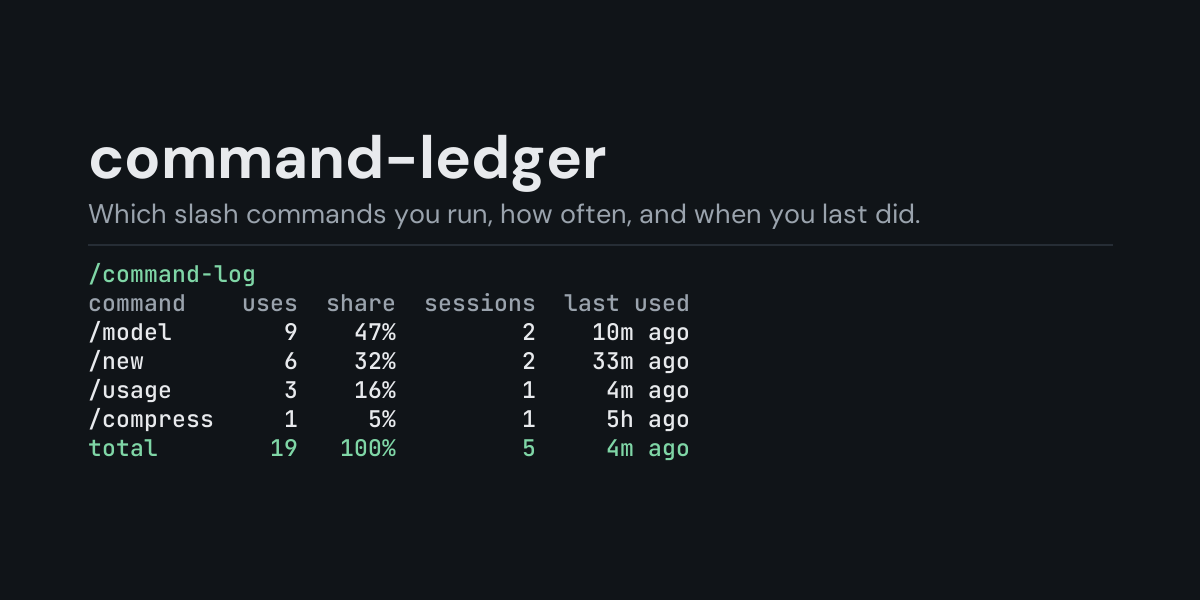
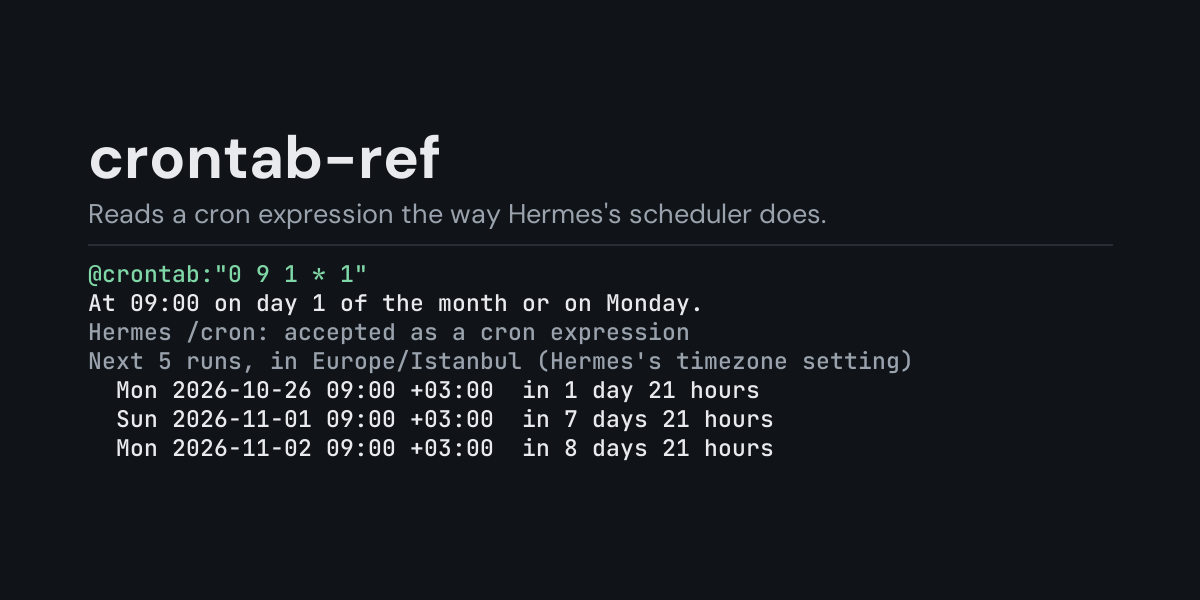
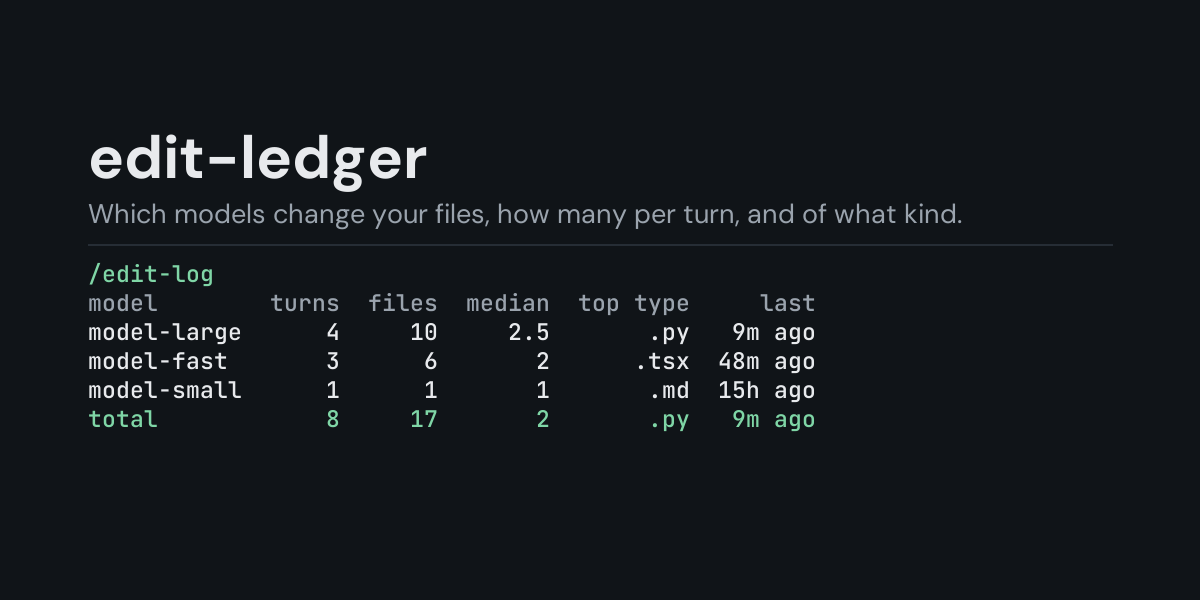
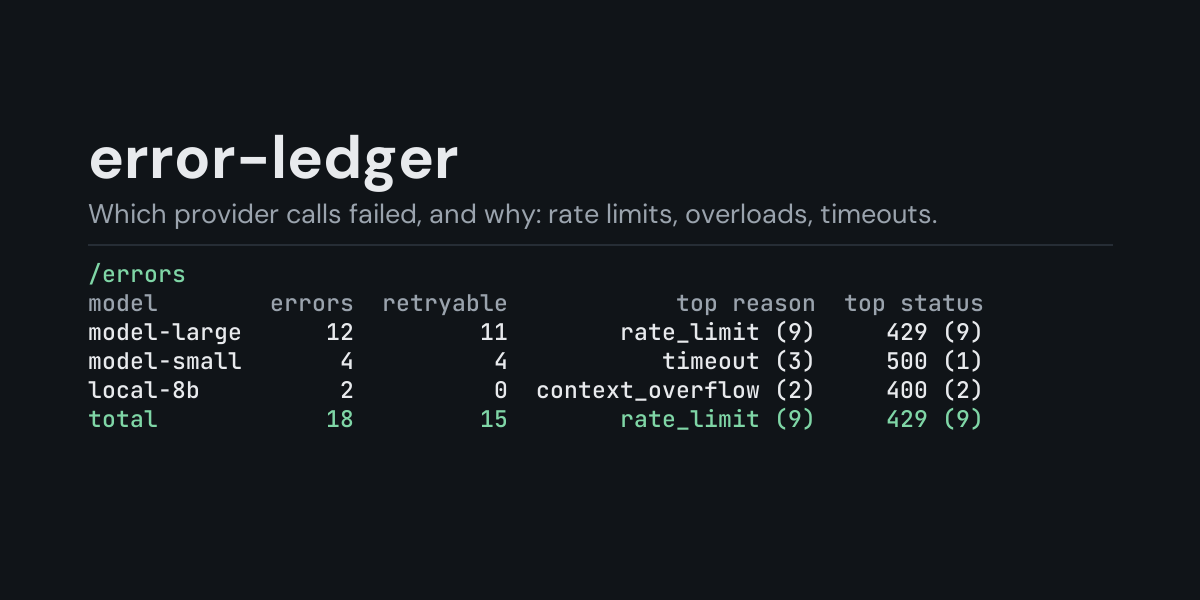
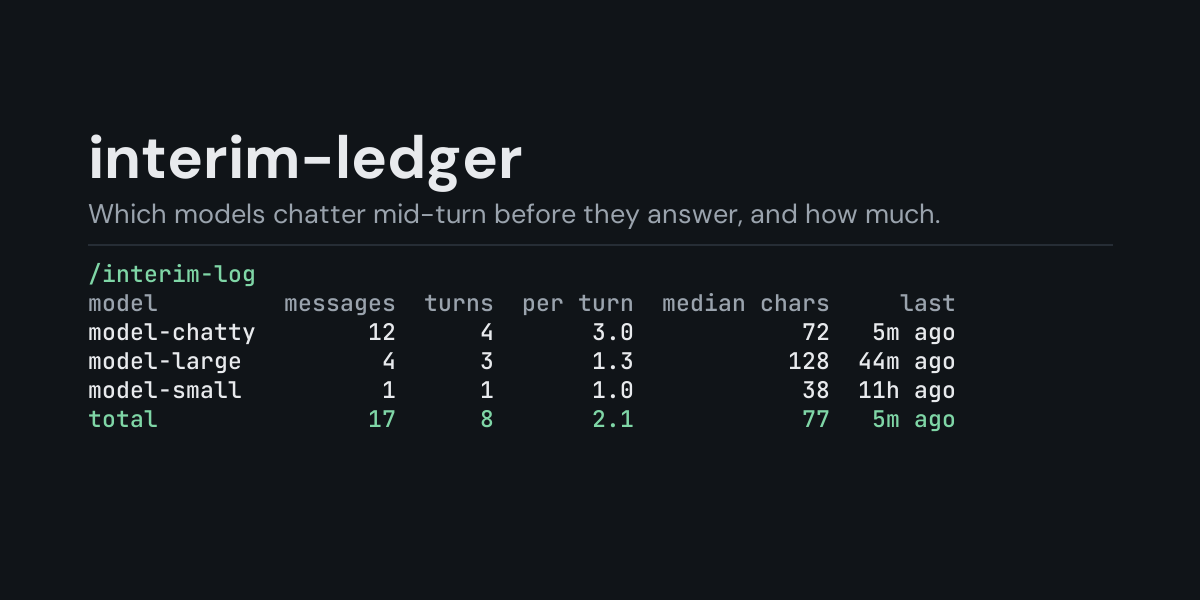
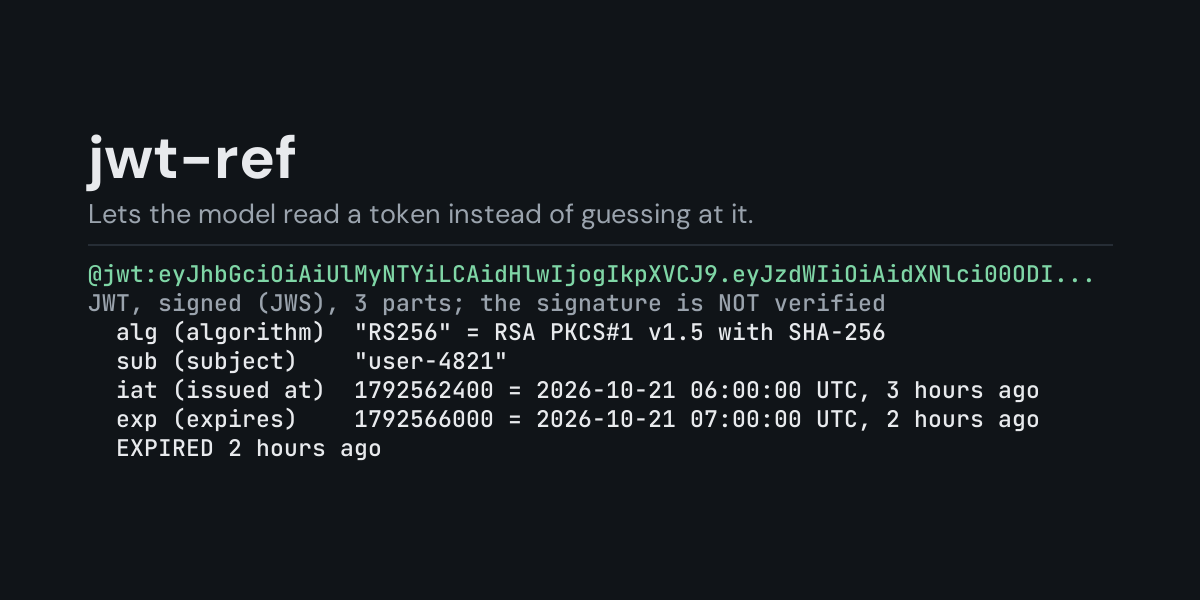
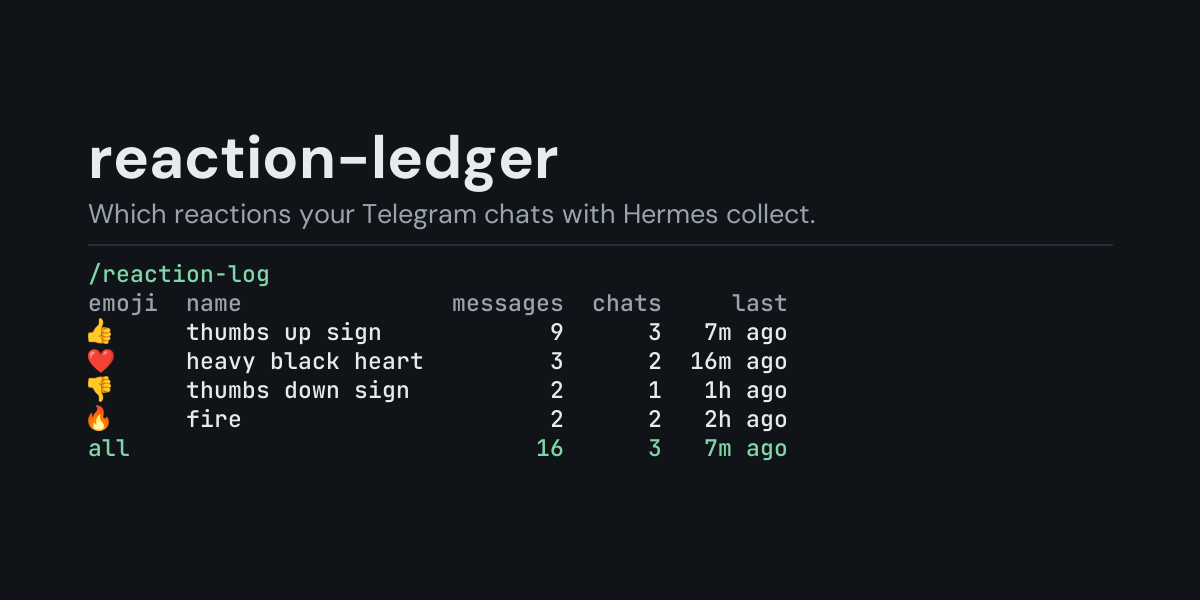
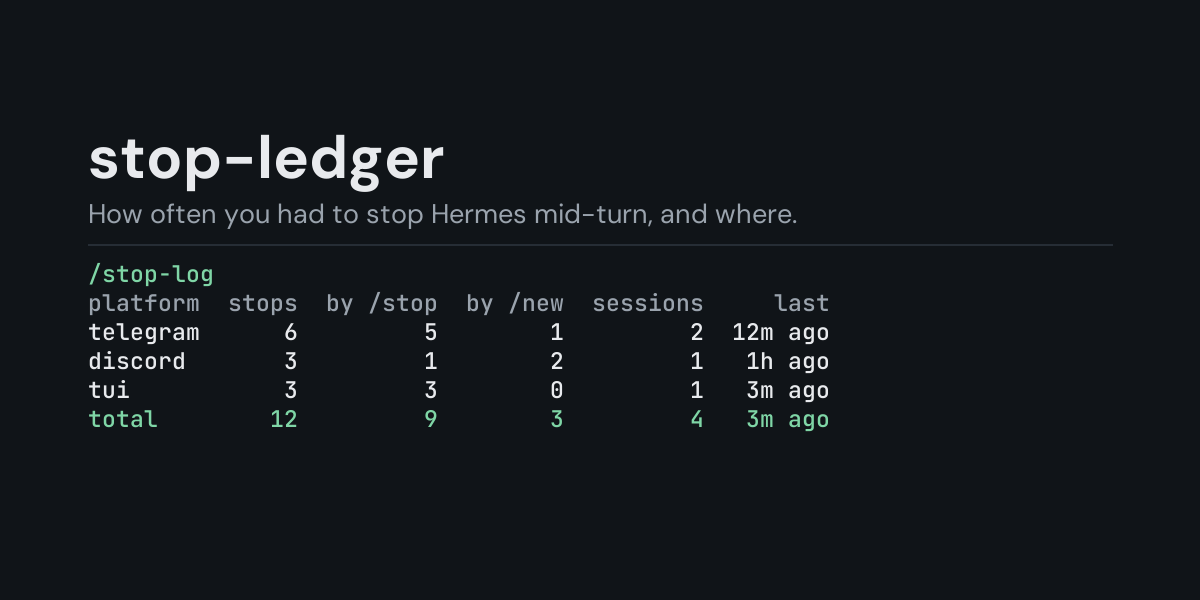
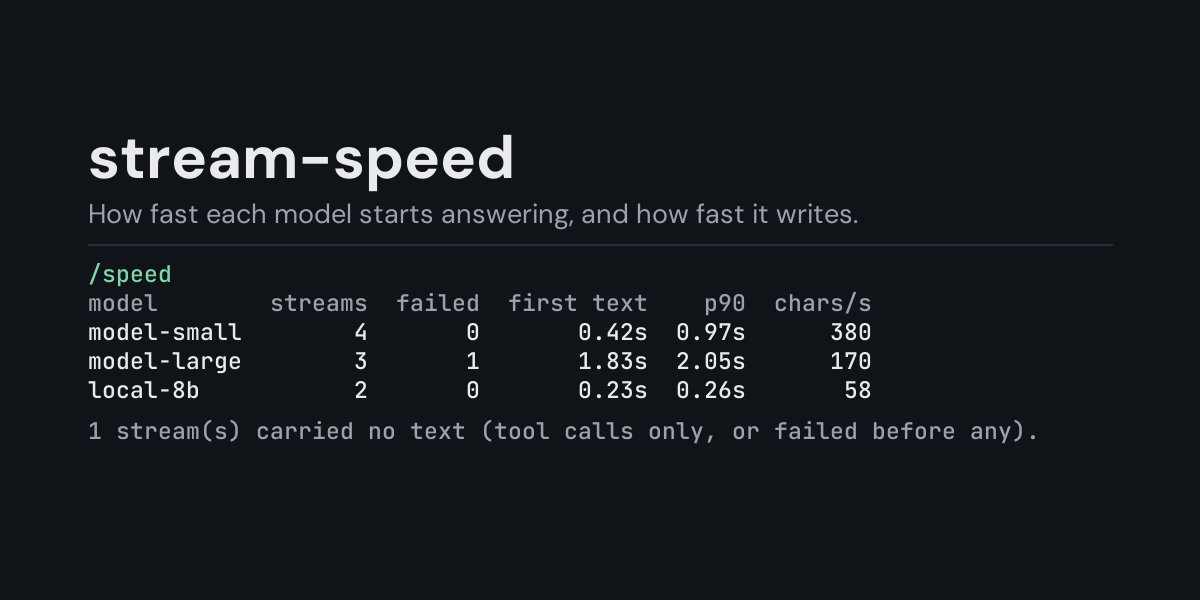
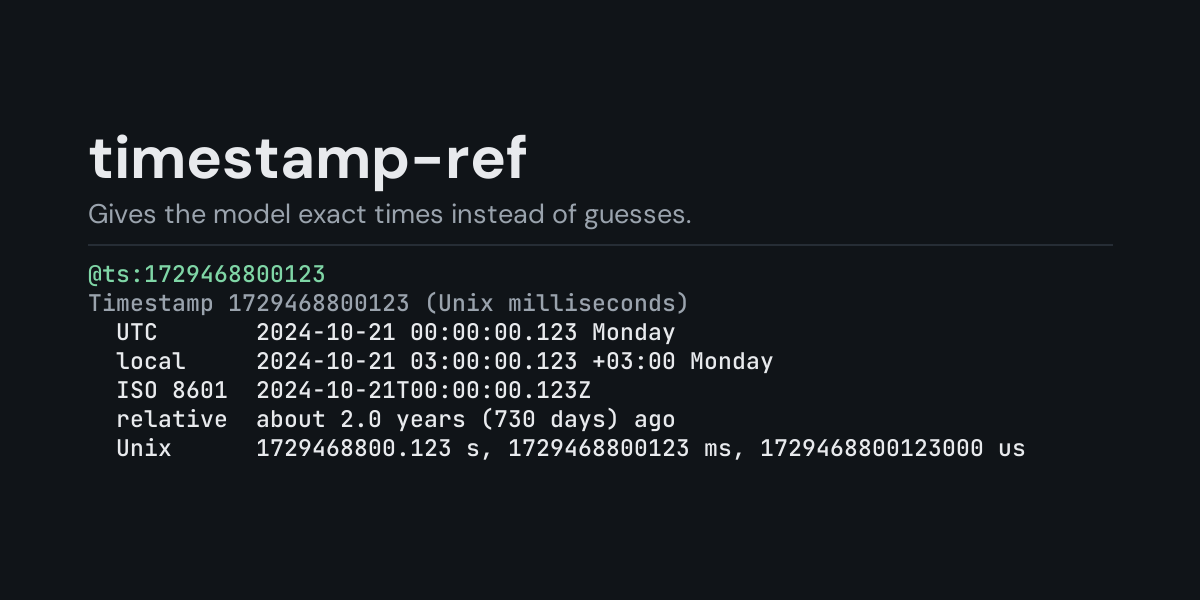
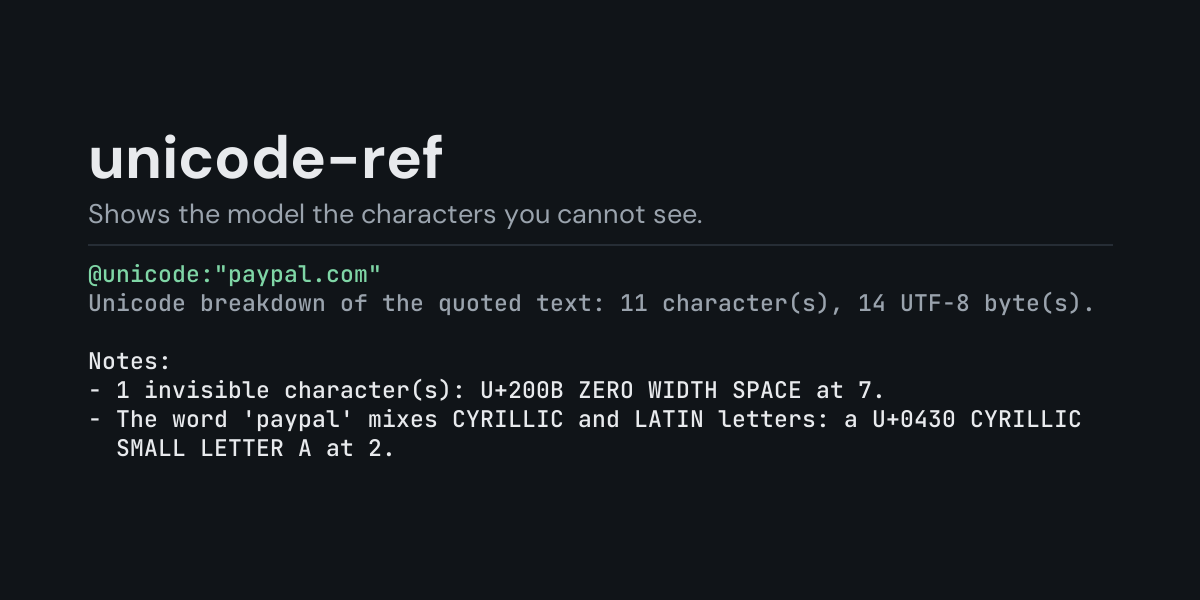
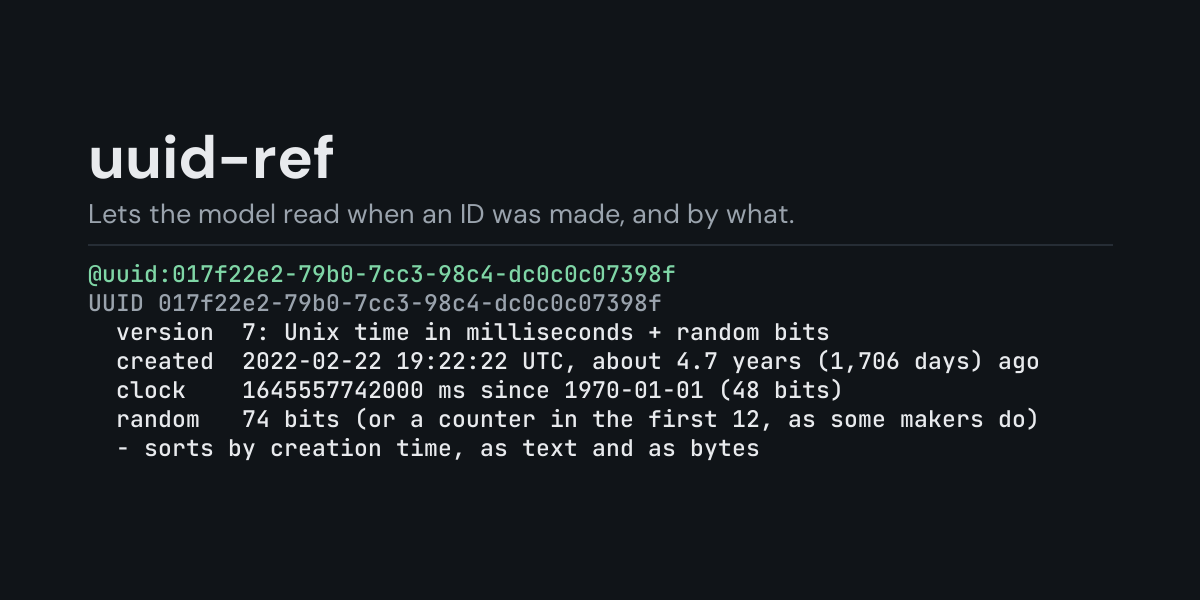
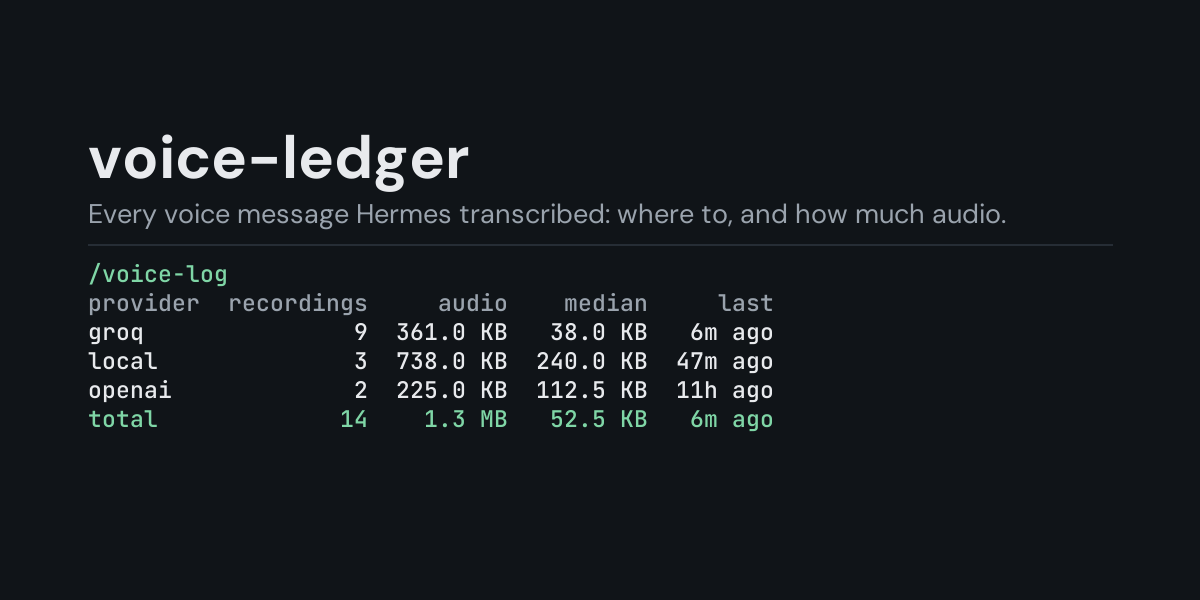
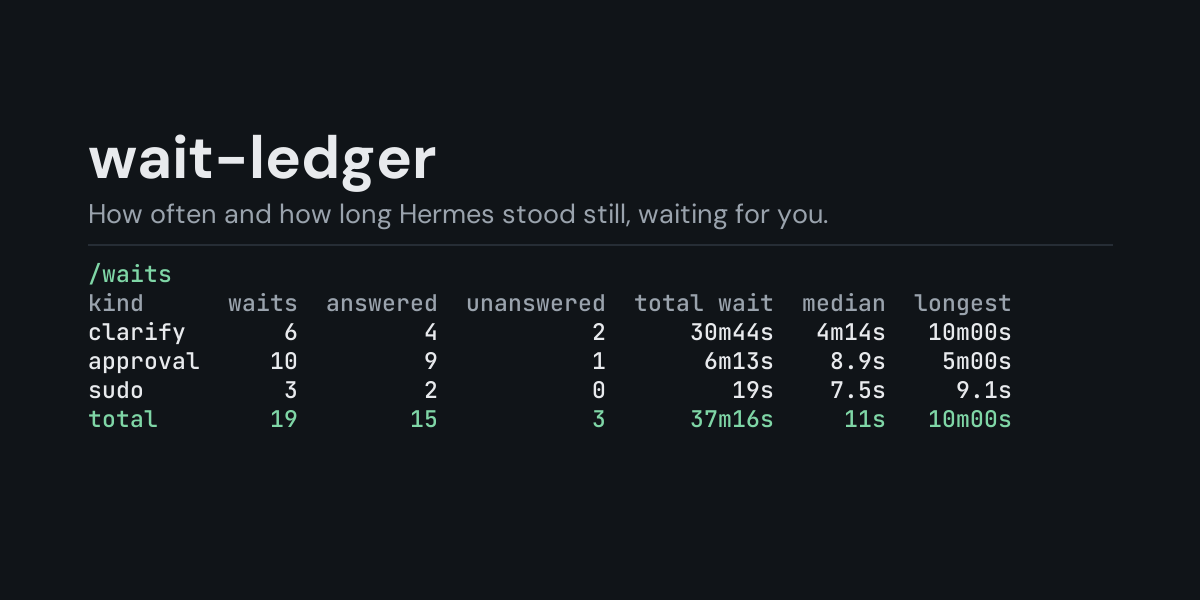
olric3015approval-ledgerLocal ledger of Hermes's approval prompts (dangerous commands, protected writes, MCP consent, smart-mode verdicts): /approval-log shows how often each rule asked, how many prompts were approved, denied or left unanswered, and how long a person took to answer, per rule, per surface or per day, for the last 24 hours, any number of hours or days, the latest session or everything recorded; /approval-log recent lists the newest decisions (ten, or up to 100 with /approval-log recent 50). Disclosure — writes decision metadata (session id, surface, rule label, answer, timings; no command, description or session key) to plugin-data/approval-ledger/approvals.jsonl, trimmed to 5,000 rows past 2 MB; observer only, cannot answer or change an approval; no networkCommunitytoolsolric3015aux-ledgerLocal ledger of Hermes's auxiliary LLM calls (titling, compression, vision, approval): /aux shows tokens, time and failures per task, model, provider or day, or lists the newest calls (ten, or up to 100 with /aux recent 50), for the last 24 hours, any number of hours or days, the latest session or everything recorded. Disclosure — writes auxiliary-call metadata (ids, models, timings, token counts, no prompt or response text) to plugin-data/aux-ledger/calls.jsonl, trimmed to 5,000 rows past 2 MB; no networkCommunitytoolsolric3015b64-ref@b64: context references that decode encoded text for the model: @b64:<value> takes base64 (standard or URL-safe, padded or not), hex (0x48656c6c6f, 48:65:6c, \x48\x65), percent-encoding or a data: URI, told apart by the value's shape or picked with base64:, base64url:, hex: or url:, and attaches what it holds: text as text with control and invisible characters escaped, JSON pretty-printed, gzip and zlib inflated in memory (at most 1 MiB, one layer), and binary named by its format (PNG and GIF with their size, JPEG, PDF, ZIP, ELF, SQLite and more) with a hex dump of its first 128 bytes; notes point out a value that was cut short, padding that is off, a second layer of encoding and a JWT inside; the TUI and Desktop composer preview a value as you type it. Disclosure — reads only the text of the reference itself, using Python's base64, json, urllib.parse and zlib; nothing decoded is run, opened or saved; no network, no files read or written, no subprocess, no credentials read; the plugin keeps no copy of what it decodes, but the @b64: reference and the decoded contents become part of the message sent to your model provider and saved in the session history, so decode only values you are willing to share with it; register() only adds the @b64: reference provider.Communitytoolsolric3015chmod-ref@chmod: context references that explain a file permission mode for the model: @chmod:<mode> takes an octal mode (755, 0755, 4755), ls -l text (-rwsr-xr-x, with the file type letter and a trailing + . or @) or an st_mode as stat and git write it (100644), and attaches both forms, each class's rights in words (directory rights named as such), what setuid, setgid and the sticky bit do and where they are ignored, and notes such as a mode everyone can change, one private to the owner, or a class holding rights the class before it lacks; @chmod:"644 u+x,go-w" applies a symbolic change step by step the way GNU chmod does (u g o a, + - =, r w x X s t, copies like u=g), @chmod:"100644 100755" shows what changes between two modes, and @chmod:"umask 027" shows what new files and directories get; the TUI and Desktop composer preview a mode as you type it. Disclosure — reads only the text of the reference itself, using Python's re; it never looks at a file on disk; no network, no files read or written, no permission changed, no subprocess, no credentials read; the plugin keeps no copy of what you write, but the @chmod: reference and the explanation become part of the message sent to your model provider and saved in the session history; register() only adds the @chmod: reference provider.Communitytoolsolric3015command-ledgerLocal ledger of the slash commands you run in Hermes (built-in commands in the CLI, built-in and plugin commands on messaging platforms): /command-log shows how often each command was used, its share, in how many sessions and when last, per command, platform, surface or day, for the last 24 hours, any number of hours or days, the latest session or everything recorded; /command-log recent lists the newest commands (ten, or up to 100 with /command-log recent 50) with the alias typed. Disclosure — writes command metadata (command name, alias typed, surface, platform, a 12-digit hash of the session key; no arguments, session key or user id) to plugin-data/command-ledger/commands.jsonl, trimmed to 5,000 rows past 2 MB; observer only, cannot block or change a command; no networkCommunitytoolsolric3015crontab-ref@crontab: context references that explain a cron expression for the model: @crontab:"0 9 * * 1-5" (or a shortcut such as @crontab:@daily) attaches a plain-words reading ("At 09:00 on Monday through Friday."), each field on its own row, whether Hermes's /cron takes it as a cron expression (shortcuts, ? and 5#3 are not), its next five runs in Hermes's timezone setting worked out the way cron/jobs.py computes next runs, and notes on day of month OR day of week, * in the minute field, steps that do not divide the hour or day, days 29-31 and 7 as Sunday; the TUI and Desktop composer suggest examples and preview an expression as you type it. The reading comes from croniter, the library Hermes's scheduler uses. Disclosure — reads only the text of the reference itself, the system clock and Hermes's timezone setting (HERMES_TIMEZONE, else timezone from the loaded config through hermes_cli.config), using croniter (already installed with Hermes) and Python's standard library; no network, no files read or written, no subprocess, no credentials read, no cron job created, changed or run; the @crontab: reference and its explanation become part of the message sent to your model provider and saved in the session history; register() only adds the @crontab: reference provider.Communitytoolsolric3015edit-ledgerLocal ledger of the turns in which the agent changed files with write_file or patch: /edit-log shows how many turns changed files, how many files in all, the median per turn, the most changed file type and how long ago the last one was, per model, platform or day, a table of file types (extensions), or the newest turns, for the last 24 hours, any number of hours or days, the latest session or everything recorded; /edit-log recent lists the newest turns (ten, or up to 100 with /edit-log recent 50). A turn another plugin keeps going is counted once. Disclosure — subscribes to pre_verify as an observer only: always returns nothing, so it never keeps the agent going or changes a turn; writes turn metadata (model, platform, file count, files per extension, a 12-digit hash of the session id; never a path, file name or answer text) to plugin-data/edit-ledger/edits.jsonl, trimmed to 5,000 rows past 2 MB; never opens the changed files; no networkCommunitytoolsolric3015error-ledgerLocal ledger of failed provider calls (rate limits, overloads, timeouts, context overflows): /errors shows how many attempts failed per model, provider or cause, how many Hermes could retry, and the most common HTTP status, for the last 24 hours, any number of hours or days, the latest session or everything recorded; /errors days puts one day on each line, newest first; /errors recent lists the newest failures (ten, or up to 100 with /errors recent 50) and how long ago each happened. Disclosure — writes failed-attempt metadata (ids, provider, model, HTTP status, Hermes's failure class, exception class name, timings; no error message, request or prompt text) to plugin-data/error-ledger/errors.jsonl, trimmed to 5,000 rows past 2 MB; no networkCommunitytoolsolric3015interim-ledgerLocal ledger of the messages models write in the middle of a turn, before their final answer (the text that comes with a tool call, which on chat platforms can arrive as messages of their own): /interim-log shows how many each model wrote, in how many turns, how many per such turn, their median length and how long ago the last one was, per model, provider, surface or day, for the last 24 hours, any number of hours or days, the latest session or everything recorded; /interim-log recent lists the newest messages (ten, or up to 100 with /interim-log recent 50). Counted even where display.interim_assistant_messages hides them. Disclosure — writes message metadata (model, provider, surface, step of the turn, length in characters, 12-digit hashes of the session and turn ids; never the message text) to plugin-data/interim-ledger/interim.jsonl, trimmed to 5,000 rows past 2 MB; observer only, cannot delay, change or hide a message; no networkCommunitytoolsolric3015jwt-ref@jwt: context references that decode a JSON Web Token for the model: @jwt:<token> (or a quoted "Bearer <token>") attaches the header with the algorithm in words, every claim as JSON, the exp, nbf, iat and auth_time claims in UTC with how long ago or ahead they are, whether the token has expired and its lifetime, and notes on alg none, a missing or empty signature, a header that names its own key (jku, x5u, jwk), crit and duplicate names; encrypted tokens (JWE) show their header only; the TUI and Desktop composer preview a token as you type it. The signature is never verified. Disclosure — reads only the text of the reference itself and the system clock, using Python's base64, json and datetime; no network (no key sets fetched), no files read or written, no subprocess, no credentials read; the plugin keeps no copy of the token, but the @jwt: reference and the decoded header and claims become part of the message sent to your model provider and saved in the session history, so decode only tokens you are willing to share with it; register() only adds the @jwt: reference provider.Communitytoolsolric3015reaction-ledgerLocal ledger of the emoji reactions people leave on messages in your Telegram chats with Hermes: /reaction-log counts each message once, with the reactions it has now, and shows per emoji how many messages carry it, in how many chats and how long ago it was last set, or per day with the day's most used emoji, for the last 24 hours, any number of hours or days, or everything recorded; /reaction-log recent lists the newest reaction changes (ten, or up to 100 with /reaction-log recent 50). Only reactions the gateway authorizes reach it. Disclosure — subscribes to gateway_platform_event as an observer only and ignores every event but a reaction change; writes the emoji a message has after the change, a count of custom emoji and 12-digit hashes of the chat and message ids (never a user id, user name or message text) to plugin-data/reaction-ledger/reactions.jsonl, trimmed to 5,000 rows past 2 MB; no networkCommunitytoolsolric3015stop-ledgerLocal ledger of the turns you stopped while Hermes was still working (/stop, or /new and /reset during a running turn, on messaging platforms, the TUI and the desktop app): /stop-log shows how many running turns were stopped, how many by /stop and by /new, in how many sessions and how long ago the last one was, per platform or per day, for the last 24 hours, any number of hours or days, the latest session or everything recorded; /stop-log recent lists the newest stops (ten, or up to 100 with /stop-log recent 50). Disclosure — writes stop metadata (platform, /stop or /new, Hermes's label for the stop, a 12-digit hash of the session key; no session key or chat content) to plugin-data/stop-ledger/stops.jsonl, trimmed to 5,000 rows past 2 MB; observer only, cannot delay or undo a stop; no networkCommunitytoolsolric3015stream-speedHow fast each model starts answering and how fast it writes: /speed shows the median and p90 time to first text and the median characters per second per model, provider or day, or lists the newest streams (ten, or up to 100 with /speed recent 50), for the last 24 hours, any number of hours or days, the latest session or everything recorded, from the streaming hooks. Disclosure — writes per-response stream timings (ids, model, timings, character count, no text) to plugin-data/stream-speed/streams.jsonl, trimmed to 5,000 rows past 2 MB; atexit waits up to 1 s; no networkCommunitytoolsolric3015timestamp-ref@ts: context references that turn timestamps into readable times for the model: @ts:1729468800123 attaches the moment in UTC, in the local time zone and as ISO 8601, with its weekday, how long ago or ahead it is, the same moment in Unix seconds, milliseconds and microseconds, and its ISO week; bare numbers are read as seconds, milliseconds, microseconds or nanoseconds by their length (or an s/ms/us/ns suffix) and the block says which; ISO 8601 and RFC 2822 dates and now work too, and up to 10 values in one reference also get the gaps between them; the TUI and Desktop composer preview a value as you type it. Disclosure — reads only the text of the reference itself and the system clock, using Python's datetime; no network, no files read or written, no subprocess, no credentials; register() only adds the @ts: reference providerCommunitytoolsolric3015unicode-ref@unicode: context references that spell text out character by character for the model: @unicode:"text" attaches a table of every character of the quoted text (code point, Unicode name, category) with notes on what does not show on screen: invisible characters and their positions, text-direction controls, spaces other than the ordinary one, Unicode tag characters (decoded), words that mix Latin letters with lookalike Cyrillic, Greek or fullwidth ones, and private-use or unassigned code points; @unicode:U+200B describes up to 20 code points (name, category, UTF-8 bytes, decomposition); the TUI and Desktop composer suggest characters by name. Disclosure — reads only the text of the reference itself, using Python's unicodedata; no network, no files read or written, no subprocess, no credentials; register() only adds the @unicode: reference providerCommunitytoolsolric3015uuid-ref@uuid: context references that decode a UUID or ULID for the model: @uuid:<id> takes a UUID in any common spelling (hyphens or not, braces, upper case, urn:uuid:) or a ULID, and attaches what its bits say, read the way RFC 9562 lays them out: version and variant in words, the creation time a v1, v6, v7 or ULID carries in UTC with how long ago, the clock sequence and node of a v1 or v6 and whether the node is random or looks like a network card (MAC) address, the local id and domain of a v2, a ULID's 128 bits written as a UUID, and the Nil, Max and RFC namespace UUIDs by name; up to 10 identifiers in one reference are compared by creation time; the TUI and Desktop composer preview an identifier as you type it. Disclosure — reads only the text of the reference itself and the system clock, using Python's re, datetime and fractions; nothing is looked up; no network, no files read or written, no subprocess, no credentials read; the plugin keeps no copy of the identifiers, but the @uuid: reference and the decoded text become part of the message sent to your model provider and saved in the session history; register() only adds the @uuid: reference provider.Communitytoolsolric3015voice-ledgerLocal ledger of the voice messages and recordings Hermes transcribes (voice messages from messaging platforms, CLI voice mode): /voice-log shows how many recordings there were, how much audio in total and typically, and how long ago the last one was, per speech-to-text provider, model, source, language or day, for the last 24 hours, any number of hours or days or everything recorded; /voice-log recent lists the newest recordings (ten, or up to 100 with /voice-log recent 50). Disclosure — writes recording metadata (source, provider, model, language, file size read from the file system; no audio, file path, prompt or transcript) to plugin-data/voice-ledger/voice.jsonl, trimmed to 5,000 rows past 2 MB; observer only, always returns None so the transcription request is unchanged; no networkCommunitytoolsolric3015wait-ledgerLocal ledger of the times Hermes stopped to wait for you (approval prompts, clarify questions, password prompts): /waits shows how many waits there were, how many were answered or left unanswered, and how long Hermes stood still in total, typically and at most, per kind of prompt, per platform or per day, for the last 24 hours, any number of hours or days, the latest session or everything recorded; /waits recent lists the newest waits (ten, or up to 100 with /waits recent 50). Disclosure — writes wait metadata (session id, platform, kind of prompt, how it ended, wait time; no prompt text, answer or session key) to plugin-data/wait-ledger/waits.jsonl, trimmed to 5,000 rows past 2 MB; observer only, cannot answer, delay or change a prompt; no networkCommunitytools